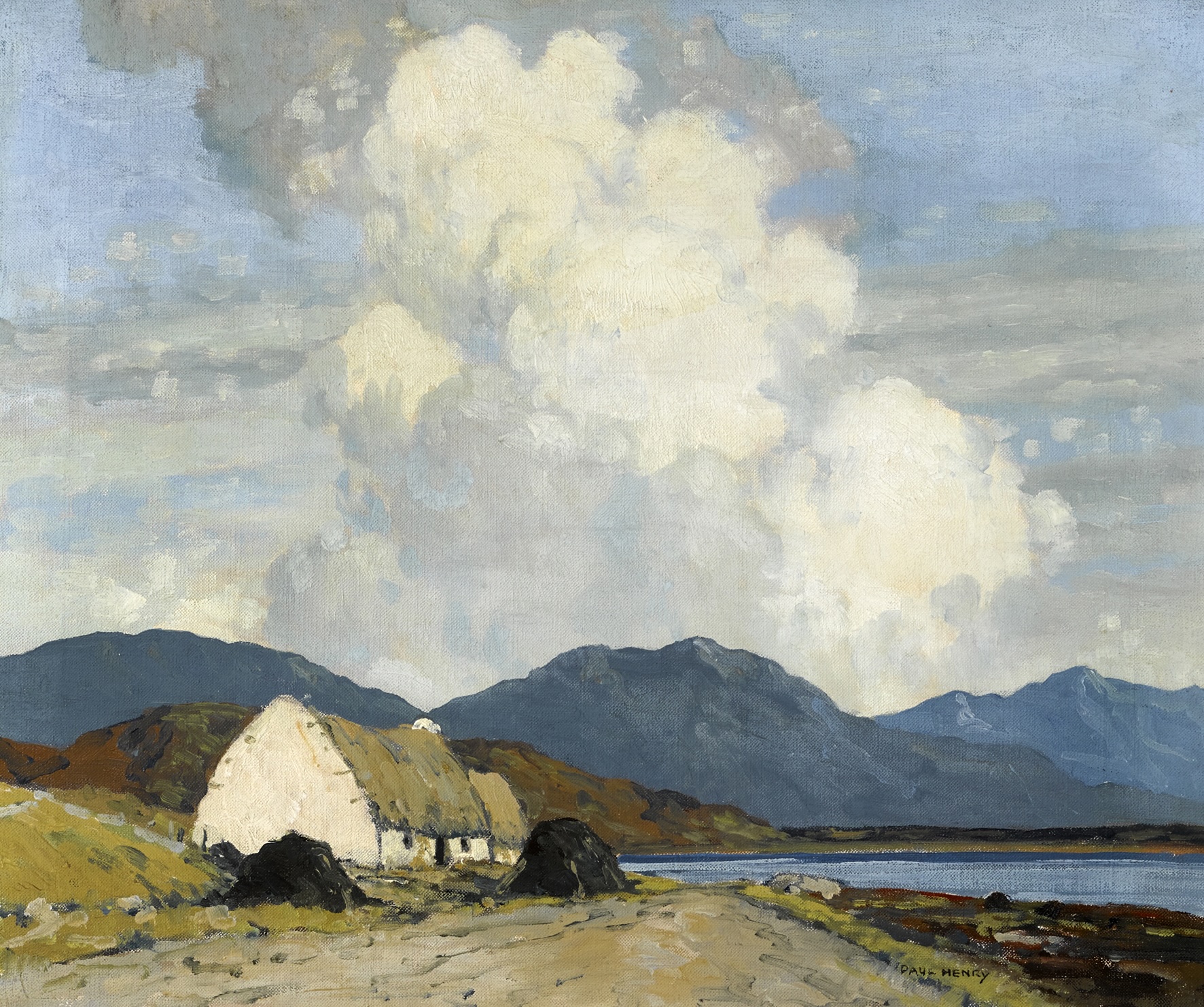
Connemara Landscape by Paul Henry UPDATE: THIS SOLD FOR 140,000
Paintings by Paul Henry, Jack B Yeats, Mainie Jellett and Roderic O’Conor make up the top six lots at Whyte’s sale of Irish and international art in Dublin next Monday evening (September 26). The combined lower estimate on these six works is €600,000. Whyte’s reckon their sale of 156 lots will generate around €1.7 million.
A Connemara Landscape by Paul Henry with all his classical hallmarks of thatched cottages, turf stacks and high cumulus clouds is, at €150,000-€200,000, the most expensively estimated work in the sale. Crossing the City by Jack B Yeats, which made €98,000 at Whyte’s in 2012, is on the catalogue 14 years later with an estimate of €120,000-€180,000.
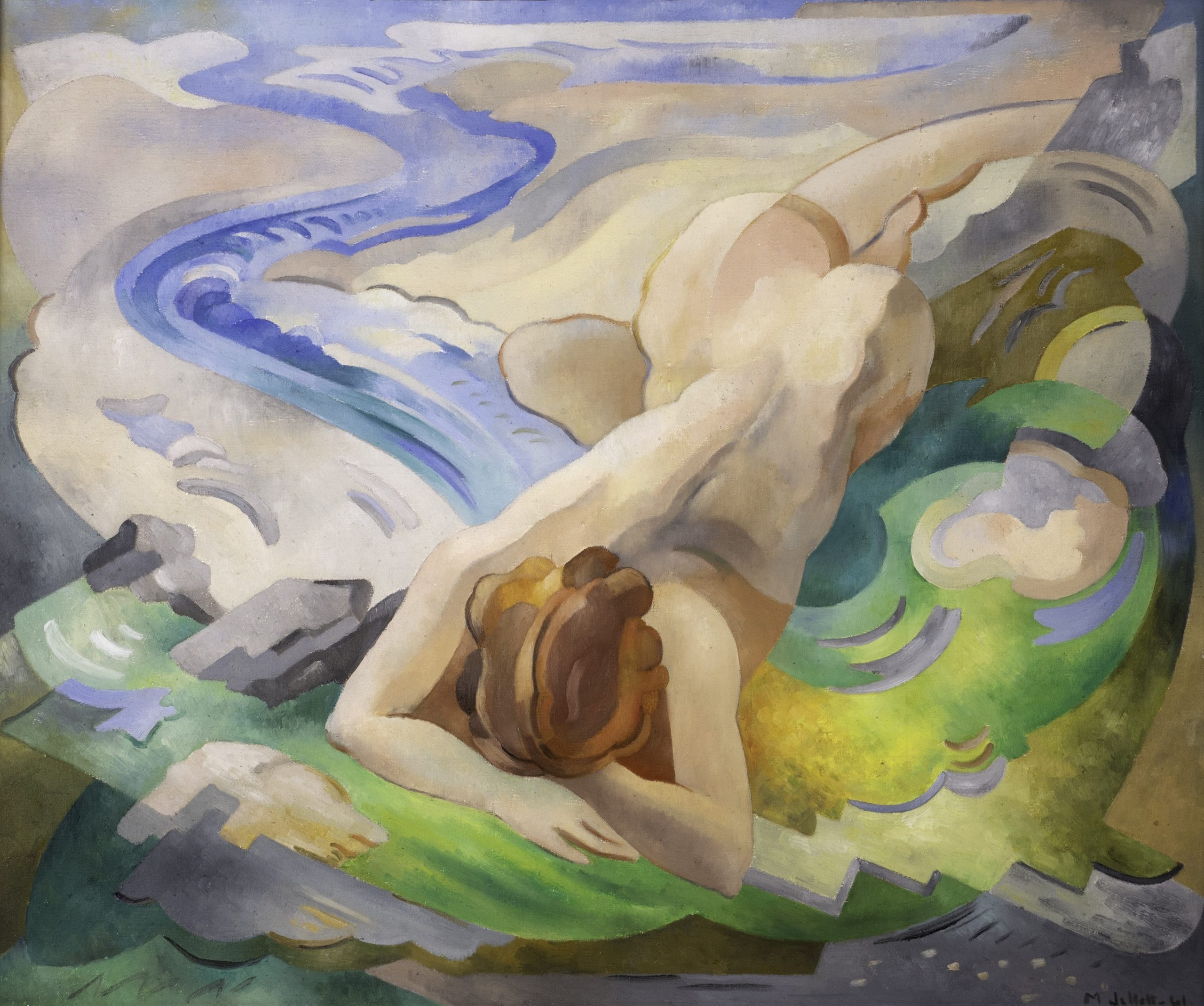
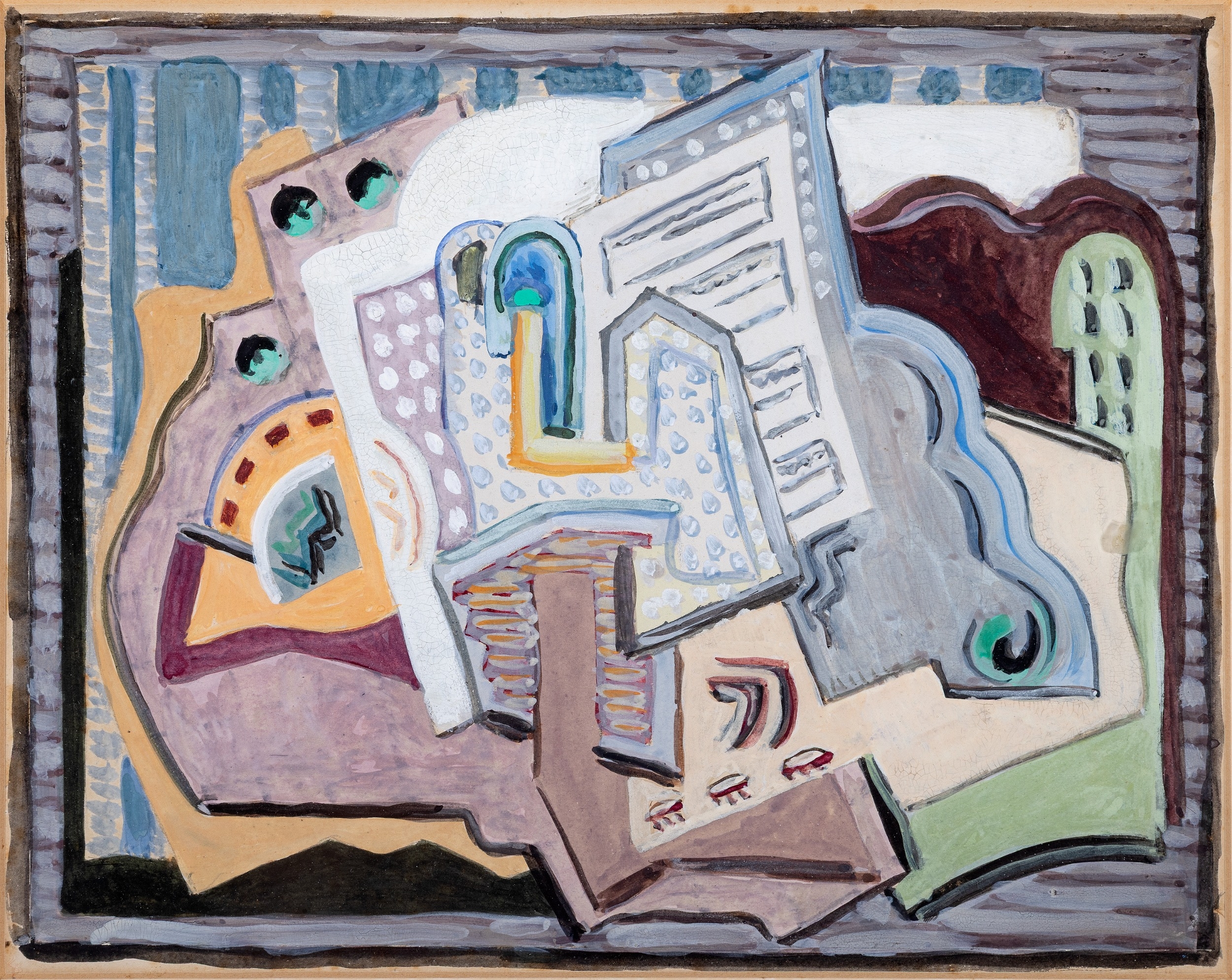
Nude by the Sea by Mainie Jellett UPDATE: THIS SOLD FOR 120,000
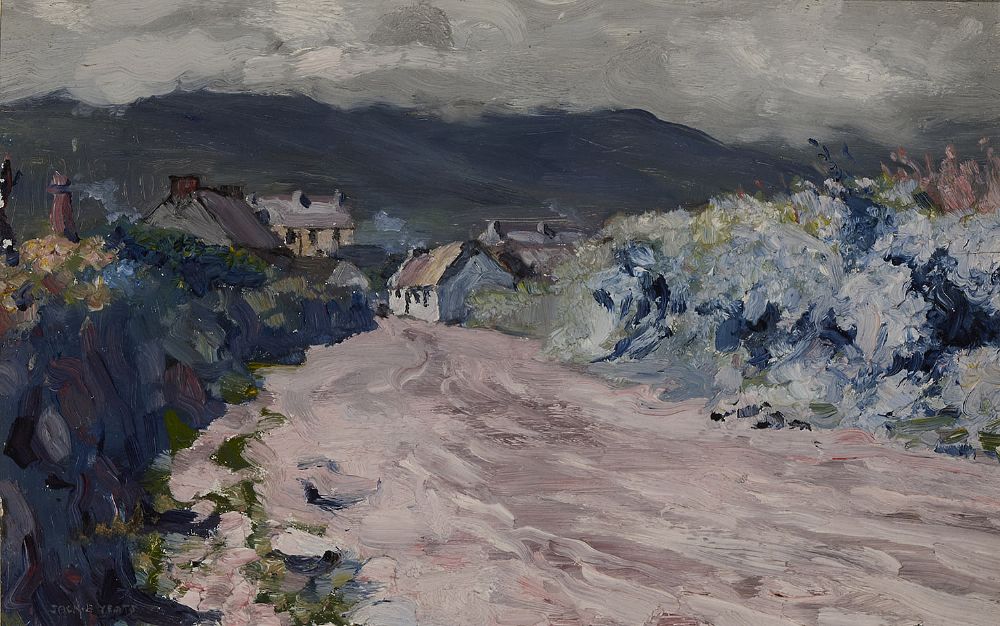
A West of Ireland Road by Henry and Against the Stream by Yeats are each estimated at €100,000-€150,000. Mainie Jellett’s Nude by the Sea, the catalogue cover lot, carries an estimate of €90,000-€120,000.
The Orchard by Roderic O’Conor, estimated at €60,000-€80,000, was one of 23 works by O’Conor included in his joint exhibition with Matthew Smith in London in 1956. This was the show which marked the beginning of his rediscovery.
More recently Long Black Train by John Shinnors (€30,000-€40,000) can be traced to the level crossing installed in 2013 at Lisnagry between Limerick city and Castleconnell.
Among the international artists on the catalogue are Carl Reichert, Thomas Blinks, Francisco Sanchez Clement, Johannes Eversen and Charles Burton-Barber. There is as well a signed mint condition limited edition copy of ‘A Bigger Book’ by the late David Hockney.
Significant works by William Conor, Aloysius O’Kelly, John Lavery, Grace Henry, George Campbell, Patrick Hennessy and John Doherty feature in a selection that includes art by Markey Robinson, Arthur Maderson, Thomas Ryan, Martin Mooney, Ciaran Clear, Kenneth Webb and many other artists.
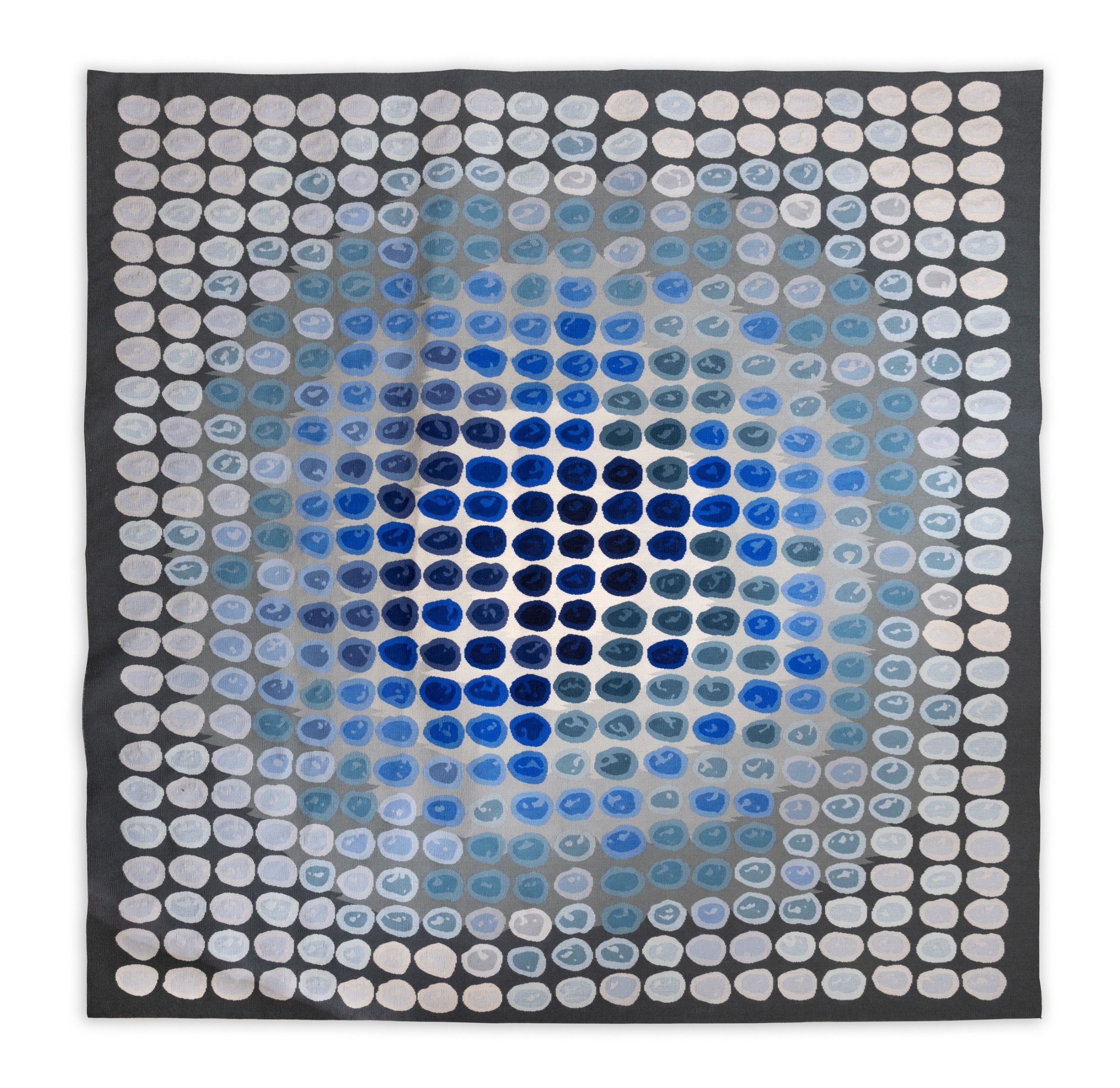
The Place collection by Ceadogán rugs, with eleven original wall hangings created in collaboration with eleven contemporary artists, will be auctioned as lots 146-156. Artists Serena Caulfield, Tom Climent, Dorothy Cross, Guggi, Paul Hallahan, Leah Hewson, Eleanor McCaughey, Gwen O’Dowd, Kathy Prendergast, The Project Twins and Maria Simmonds-Gooding were invited to unleash their creativity and explore their relationship with the natural world. Estimates range from €2,500-€6,000.
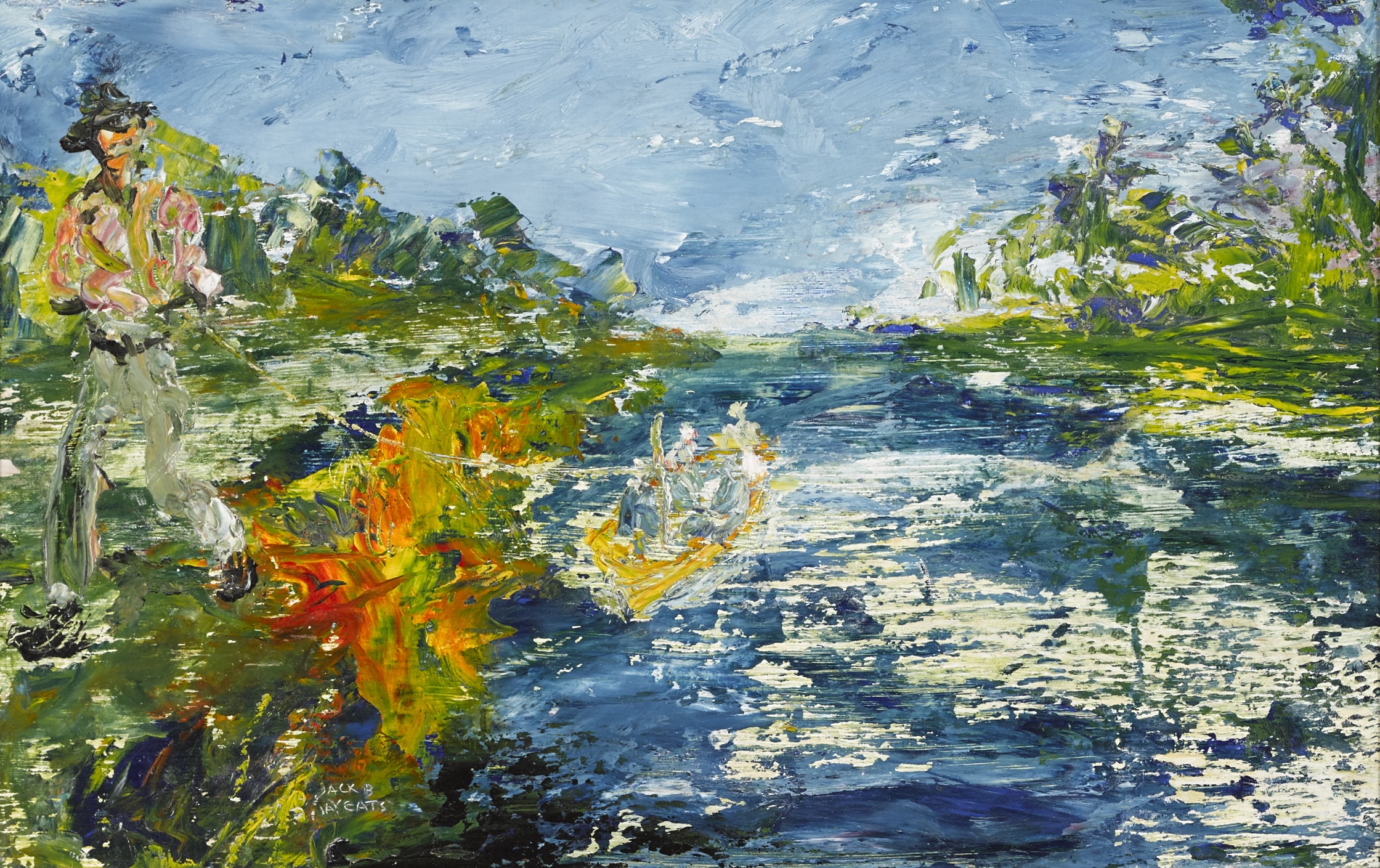
Against the Stream (1945) by Jack B Yeats. UPDATE: THIS SOLD FOR 125,000