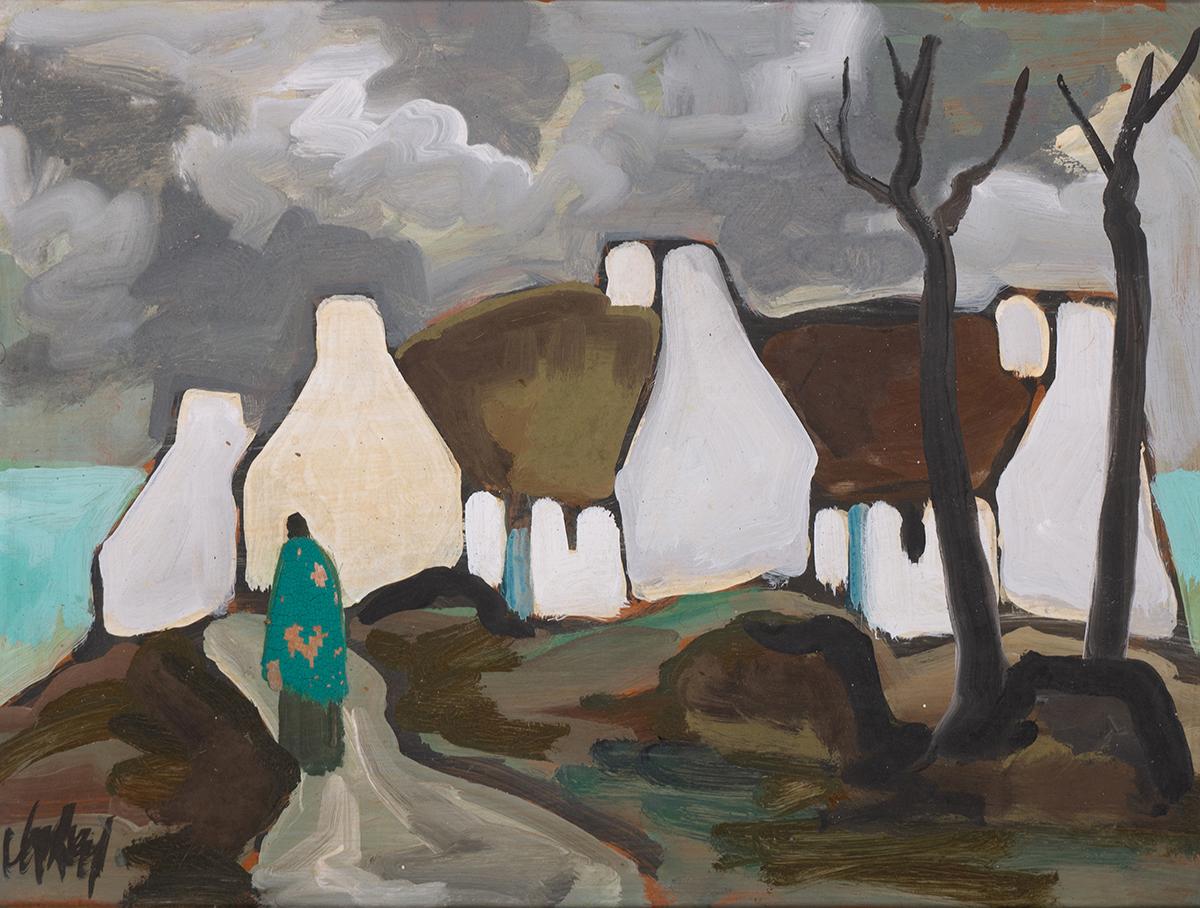
MARKEY ROBINSON (1918-1999) – SHAWLIE ON A ROAD INTO A VILLAGE. UPDATE: THIS MADE 3,200 AT HAMMER
This oil on board by Markey Robinson comes up as lot 6 at Whyte’s Christmas sale of art and collectibles which ends from 6 pm on December 13. The estimate is €1,500-€2,000. With everything from Bealtes lithographs by Andy Warhol to Sheep by Graham Knuttel he work of a broad range of artists at affordable estimates is available. The timed online auction offers art, books, silver, wines and spirits.
JEAN DUPAS (1882-1964) Set of Three Panels from the ‘Birth of Aphrodite’ Mural from the Grand Salon of The S.S. Normandie, circa 1934
The iconic ‘Birth of Aphrodite’ panels created by Jean Dupas for the Grand Salon of the famed liner S.S. Normandie made $378,000 at Christie’s two day series of Design sales in New York. The results were exceptional. The first sale featured a group of works by leading artists and designers from 1900 through to the present and achieved $11,408,670. The second was a showcase of works by glassmaker Louis Comfort Tiffany and the Tiffany Studio and it brought in $3,676,050. The highest prices were achieved by Les Lalannes, the iconic 20th century artist couple. François-Xavier Lalanne bronzes ‘Singe Alternatif IV’ made $945,000 and a black Bélier made $882,000. The third highest price was made by a ‘Singerie’ armchair by Claude Lalanne. The top lot of the Tiffany sale was a window – ‘Landscape with Magnolias and Irises’ – which made $705,600, three and a half times its low estimate.
TIFFANY STUDIOS ‘LANDSCAPE WITH MAGNOLIAS AND IRISES’ WINDOW, CIRCA 1910
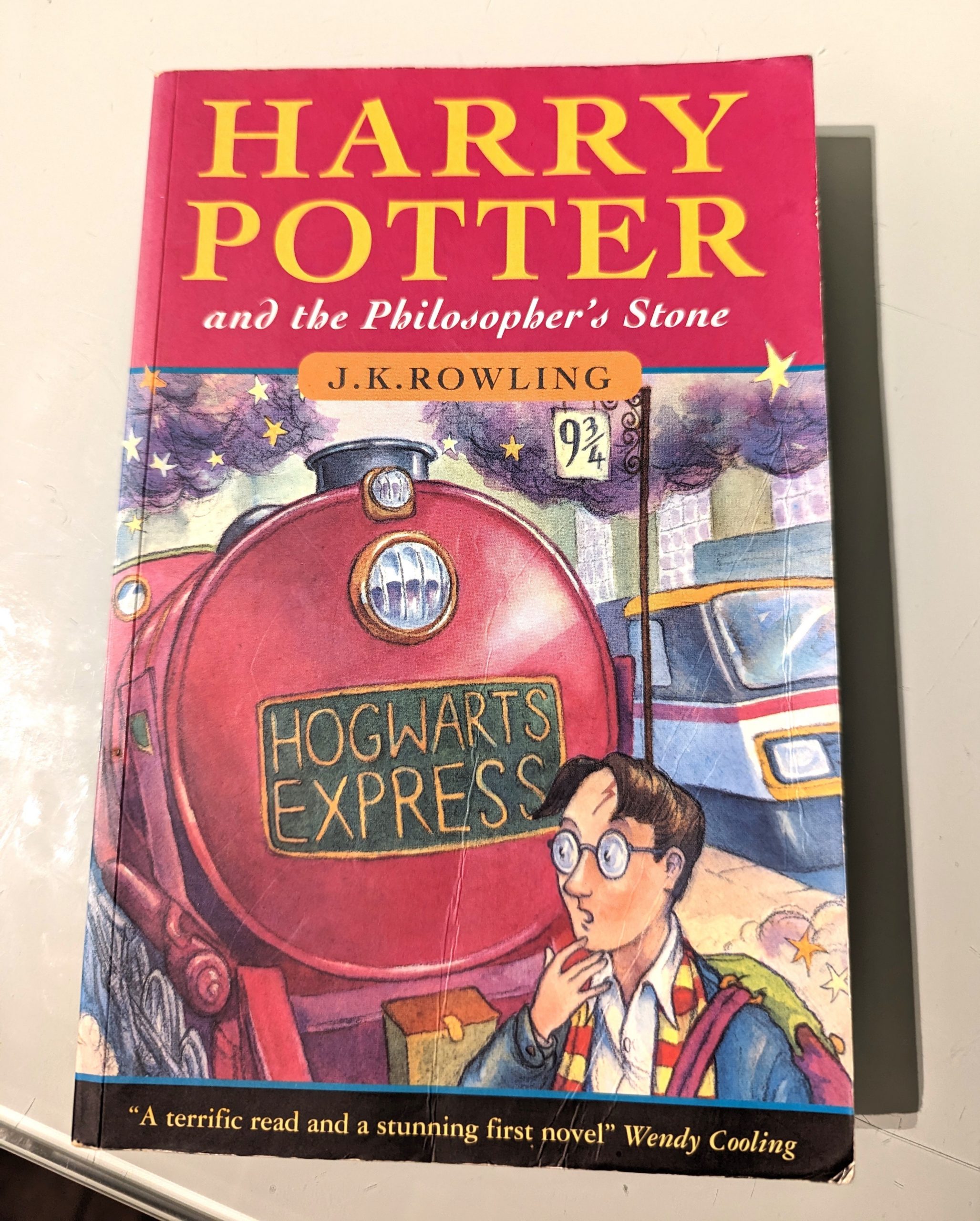
A first edition of the first Harry Potter book. UPDATE: THIS MADE 13,800 AT HAMMER
The online sale by Hegarty’s in Bandon from 5 pm on December 12 will feature a first paperback edition of the first Harry Potter book, one of 5,150 copies in wrappers. Both paperback and hardback editions of Harry Potter and the Philosopher’s Stone were published on June 26, 1997. This one is estimated at around €3,000. The sale offers art by Graham Knuttel and a selection of antique furniture, collectibles and jewellery including contents from
John Doyle (1797-1868) – Portrait of Daniel O’Connell holding a pistol.
Daniel O’Connell’s monogrammed leather gun case made a hammer price of €950 at Marshs online sale in Cork today. It had been estimated at €1,000-€1,500. By coincidence a half length portrait of Daniel O’Connell holding a pistol by John Doyle (1797-1868), the Irish artist who was grandfather to Sir Arthur Conan Doyle, came up last week at Bonhams Irish sale. The estimate was just €700-€1,000. It was unsold in an auction where Paul Henry’s Killary Bay, Connemara made €140,500 and a portrait of Harry Clarke by Margaret Clarke made €51,200.
(See post on antiquesandartireland.com for December 3, 2023).
William Hurst Ashpitel’s prizewinning 1805 design for Ormond Bridge, Dublin. UPDATE: THIS MADE 11,000 AT HAMMER
A bound copy of one of the most elaborate 19th century publications on the Near East leads Fonsie Mealy’s two day rare book and collectors sale on December 12 and 13. This brimful of interest sale, being held this year in Castlecomer, offers rarities like the first edition of the first book by the first Irish author to write for a printing press rather than a scriptorum, important 1916 documents, the first Dublin All Ireland Hurling Championships medal from 1889, a lock of Oscar Wilde’s hair and the 1805 design for Ormond Bridge in Dublin (now named O’Donovan Rossa Bridge) by William Hurst Ashpitel (1776-1852). The design for O’Donovan Rossa Bridge near the Four Courts in Dublin is important because it was William Hurst Ashpitel of London who won the design competition in 1805. The bridge as it stands is as shown in his drawing, but the architects had previously been identified only as George Knowles and James Savage. This piece of architectural history is estimated at €5,000-€7,000.
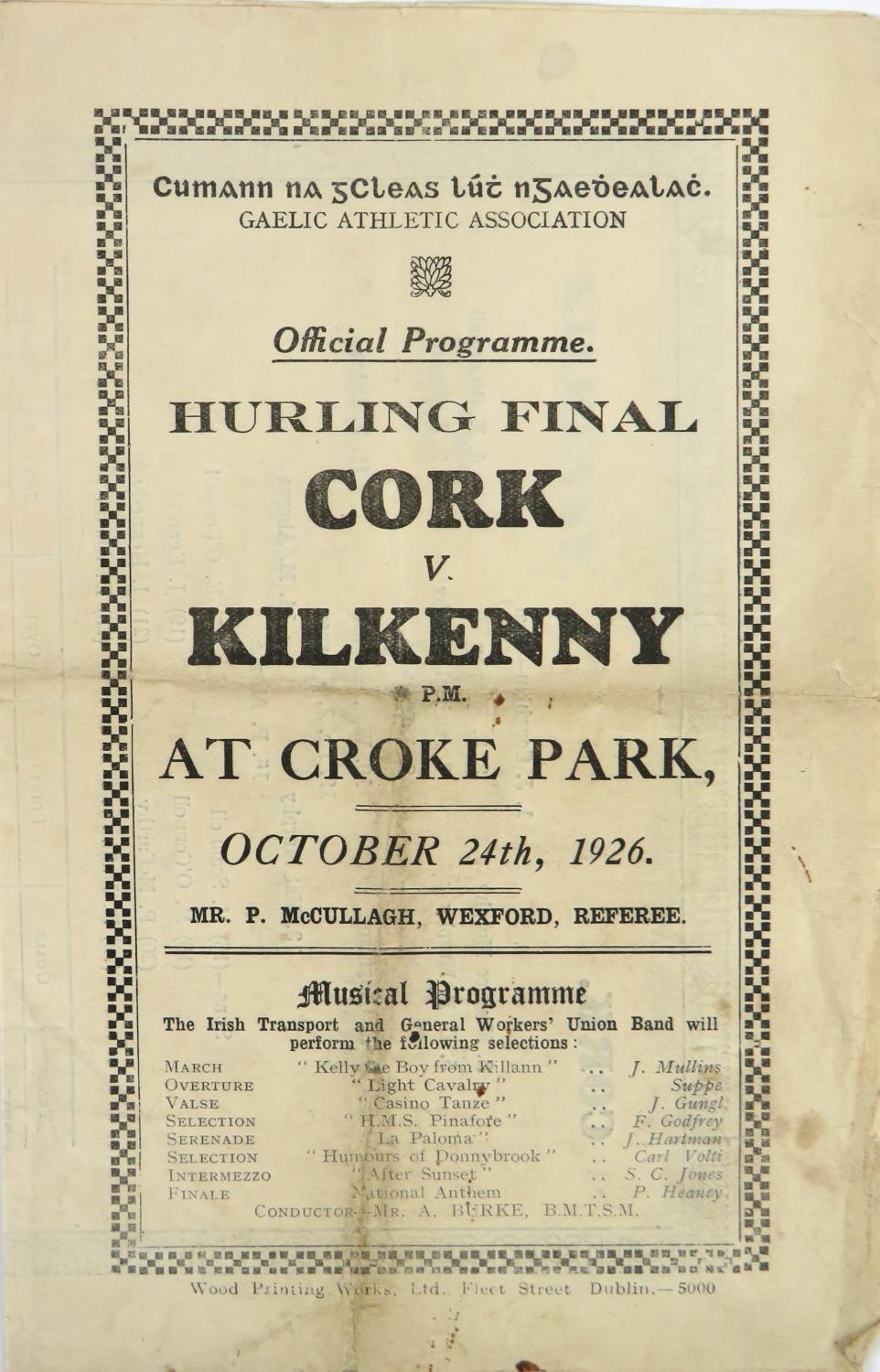
A 1926 All Ireland hurling final programme (won by Cork). UPDATE: THIS MADE 3,000 AT HAMMER
Among more than 1,000 lots are a variety of GAA medals and other sporting memorabilia like a Bloody Sunday match ticket, a set of 26 views of Dublin by James Malton, a collection of Irish literature, travel plates and books and an unpublished letter by Michael Collins dated July 29, 1922 – just three weeks before his death – in which he states: “I am against shooting down unarmed men in any circumstances”. The first three volumes of The Holy Land, Syria, Idumae, Arabia, Egypt and Nubia by David Roberts and George Croly, published in 1842-43, is estimated at €10,000-€15,000. Duns Scotus Joannes by Maurice O’Fihily, Archbishop of Tuam – an edited commentary on the metaphysics of Aristotle believed to be the work of Duns published in Venice in 1497 – has an estimate of €8,000-€12,000.
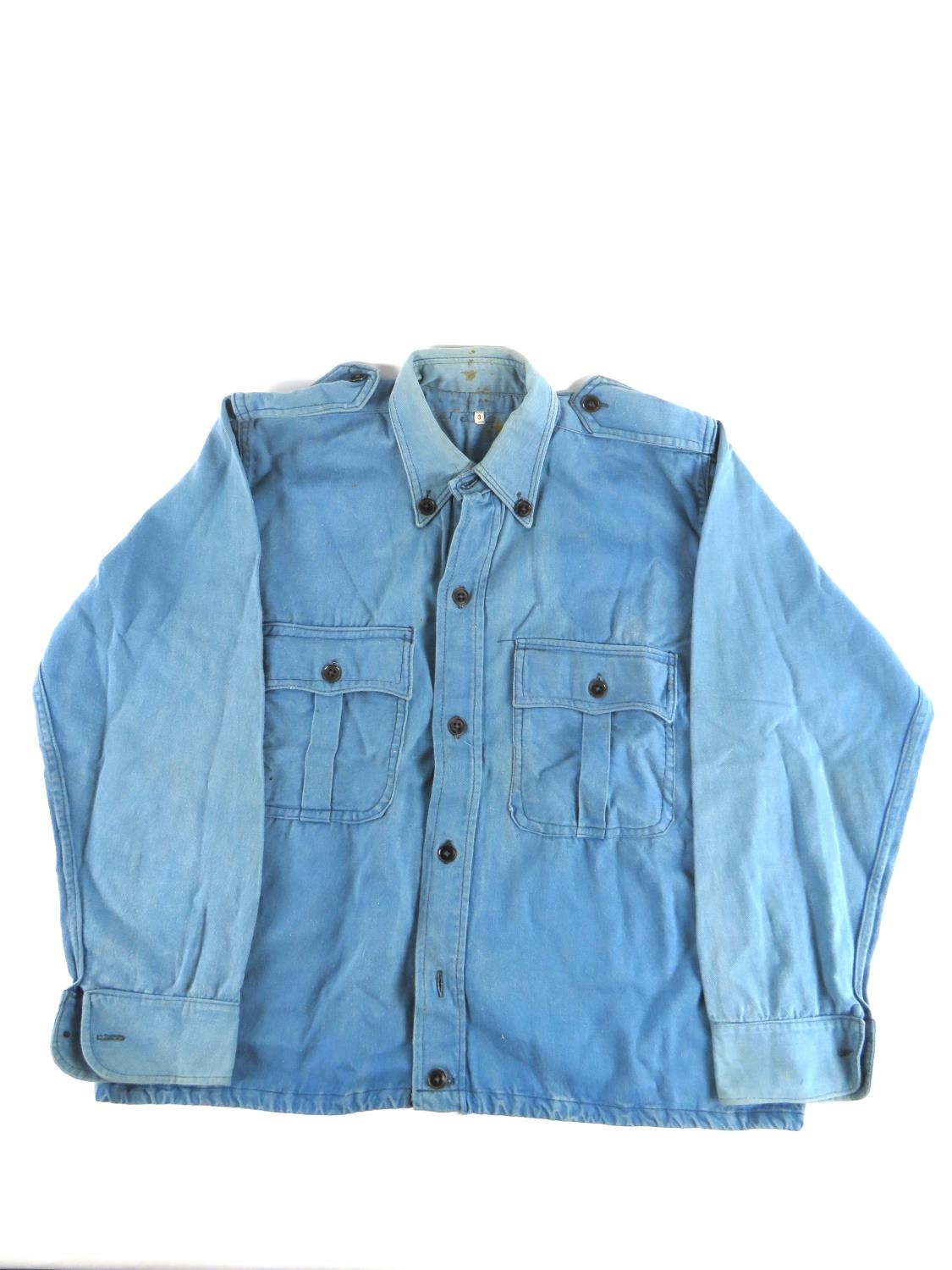
An original Army issue Blueshirt tunic. UPDATE: THIS MADE 950 AT HAMMER
Among the other top lots are Dublin’s first All-Ireland medal from 1889 (€7,000-€10,000), a collection of 1916 documents including a rare copy of Irish War News printed during the Rising (€6,000-€9,000), Malton’s Dublin views and a lock of Oscar Wilde’s hair, each estimated at €6,000-€8,000. An edition of Bog Poems by Seamus Heaney illustrated by Barrie Cooke is estimated at €4,000-€6,000, as is a facsimile edition of the Book of Kells, and a copy of An Ideal Husband inscribed by Oscar Wilde.
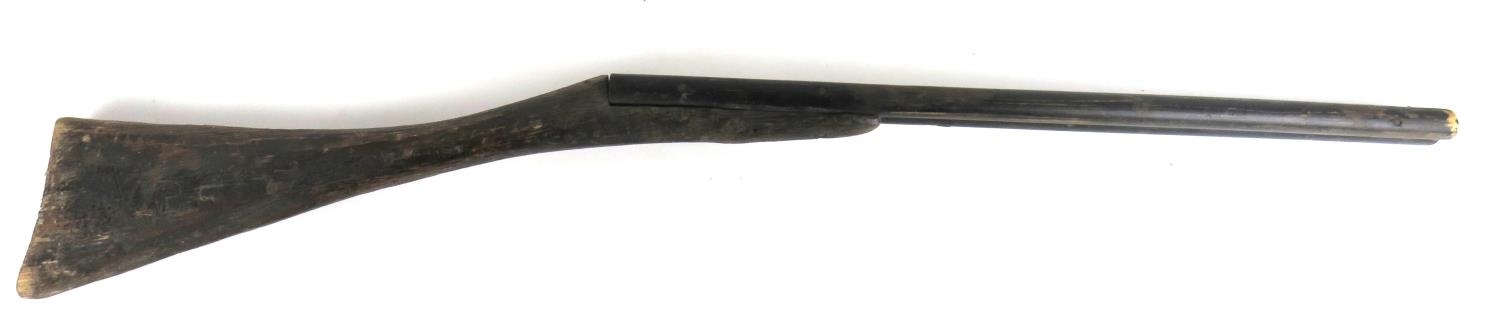
A dummy rifle used in North Cork training during the War of Independence. UPDATE: THIS MADE 280 AT HAMMER
Among many lots of note is an original Army issued Blueshirt tunic (€1,000-€1,500), a rare dummy wooden training rifle used in the early stages of the War of Independence in North Cork (€300-€500) – this lot highlights the lack of basic equipment by those in Ireland who took on the might of the British Empire just over a century ago and won! – and a cheque written in 1920 by Terence MacSwiney during his brief tenure as martyred Lord Mayor of Cork to the Good Shepherd Convent. He disbursed his entire mayoral salary in charitable donations.The auction will take place at the saleroom in Castlecomer and online next Tuesday and Wednesday at 10.30 am on each day. The catalogue is online and viewing continues in Castlecomer tomorrow afternoon and all day on Monday.
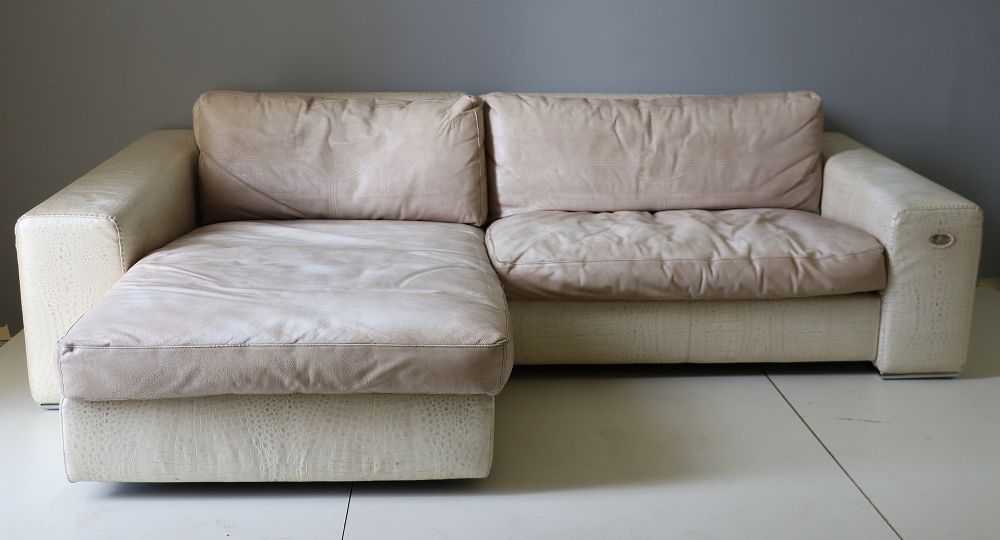
A leather L shaped sofa by Fendi (€600-€1,000). UPDATE: THIS WAS UNSOLD
Art by Patrick Scott, Frank McKelvey, Charles Brady and Louis le Brocquy feature in the Christmas art and design sale at de Veres. The timed online auction closes next Tuesday (December 12) and offers 20th century pieces by designers like Charles and Ray Eames, Rolf Benz and Fendi.
Rembrandt Harmensz van Rijn – The Adoration of the Kings
Rembrandt’s rediscovered Adoration of the Kings sold for £10.9 million (€12.7 million) at Sotheby’s in London on December 6. Just two years ago – when it was attributed to the Circle of Rembrandt – it was valued at just €10,000-€15,000 at Christie’s in Amsterdam. The complex monochromatic painting had been almost entirely unseen by scholars since the 1950’s when it came to light.
It was included in museum exhibitions and referenced as a Rembrandt work by leading Rembrandt scholars in the 1950s, but in 1960 German art historian Kurt Bauch, who only knew the painting from a black and white photograph, described it as a product of the Rembrandt School and omitted it from from the catalogue raisonné he was compiling. Thereafter, the painting was “entirely overlooked and completely ignored in the Rembrandt literature,” according to Sothebys. Following an 18 month research programme by Sotheby’s it was recognised as a work of great significance from Rembrandt’s early career.
The Adoration of the Kings was acquired by collector J.C.H. Heldring in Amsterdam in 1955. His widow sold it to a German family in 1985, where it remained until it was sold by Christie’s in Amsterdam two years ago. The painting, which measures 9.6 x 7.3 inches, was purchased by an anonymous buyer for €860,000 at the Christie’s sale — more than 50 times the estimated value. It was later identified as the work of the Dutch master.
The vast majority of Rembrandt’s works hang in museums around the world, and almost all of those that have come to auction over the past three decades have been portraits or studies of single character heads.
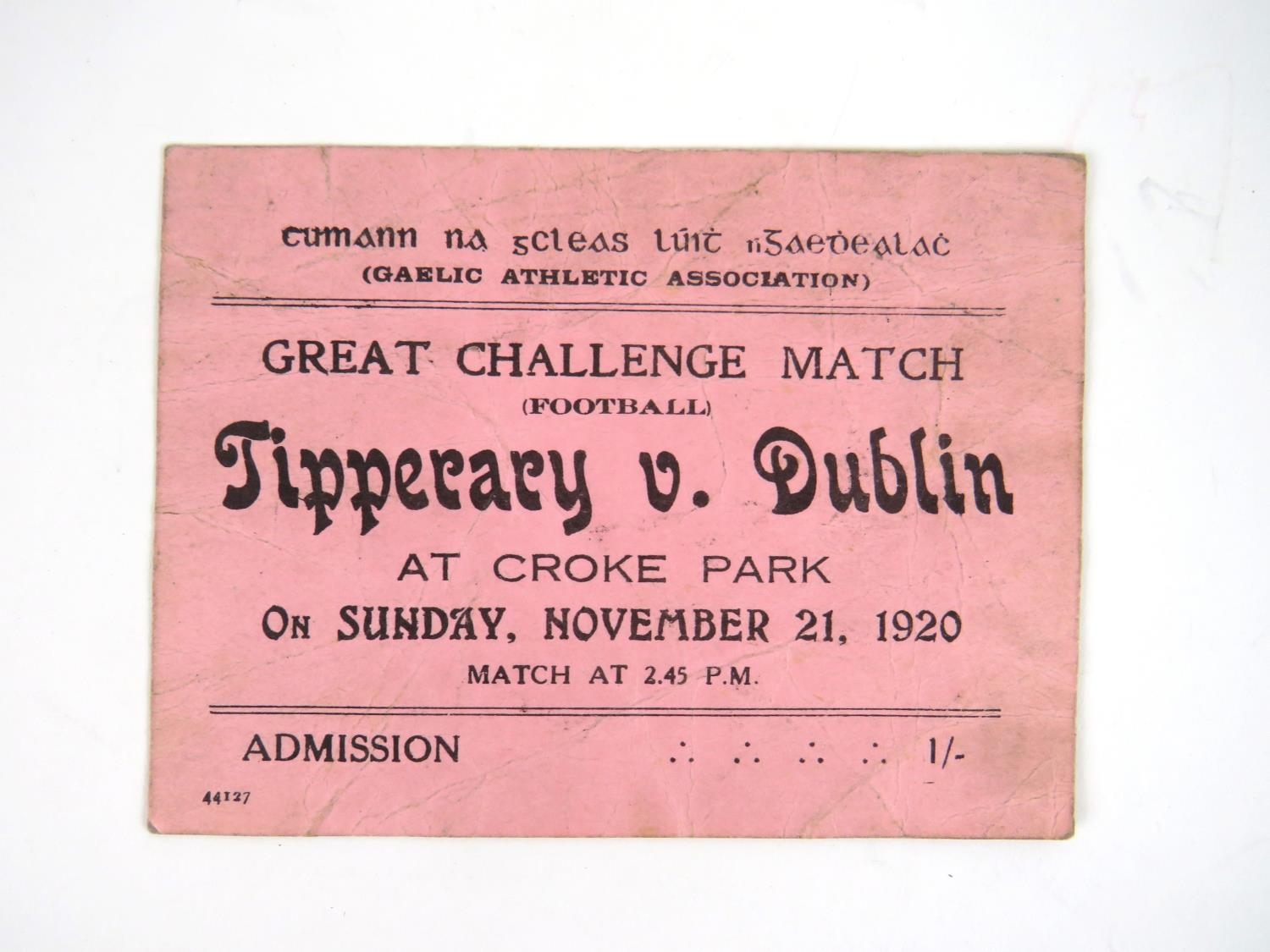
Admission Ticket to Croke Park, Great Challenge Match (Football), Tipperary v. Dublin, Bloody Sunday, November 21,1920. UPDATE: THIS MADE 8,000 AT HAMMER
Viewing is now underway in Castlecomer for Fonsie Mealy’s Christmas rare book and collector’s sale on December 12 and 13. This rare Croke Park 1920 admission ticket is highly collectible. The period from 1918 – 1920 was a turbulent and dangerous time in Ireland. It was at this match that British soldiers opened fire on the pitch and crowd, killing a player and twelve spectators. This followed Michael Collins’ operation against British secret service agents earlier that morning, in which fourteen British officers were shot dead. The ticket is estimated at €4,000-€5,000. There are many rare and collectible items on offer in this auction of 1,019 lots which will get underway each day at 10.30 am. The catalogue is online.
The National Gallery of Ireland announced today that it had acquired Titania Enchanting Bottom by Harry Clarke. It is undergoing conservation treatment and will be on display in the New Year. The luminous stained glass panel was sold by Morgan O’Driscoll last October 24 for a hammer price of €160,000. The acquisition was supported by the Patrons of Irish Art of the National Gallery of Ireland. Born in Dublin on St Patrick’s Day in 1889, Harry Clarke is one of Ireland’s best known and most beloved artists. He achieved significant acclaim in his short lifetime, working across different media including book illustration. His principal career was in the production of stained glass windows, mainly for churches and religious houses across Ireland, as well as in the UK, US and Australia. He also produced a small number of secular works in glass.
Titania Enchanting Bottom is the only glass work by Clarke that is inspired by Shakespeare. It depicts Act IV, Scene I, from Shakespeare’s comedy A Midsummer Night’s Dream. Featuring characters from the play including Bottom, Puck, Titania, Peaseblossom, Cobweb and Moth, the work is adorned with botanical elements – a detail typical of Clarke’s work. From 1917 to 1922, Clarke made a unique series of miniature panels inspired by literature – including this one – adapting his talent and passion for book illustration to the medium of stained glass. These panels were set into bespoke cabinets, of which several, including this example, were designed by Dublin-born furniture maker James Hicks (1866-1936). Titania Enchanting Bottom is one of just five panels that survive. At the National Gallery of Ireland, it joins The Song of the Mad Prince (1917) which is on display in Room 20 and was acquired by the Gallery in 1987. These panels are significant to the understanding of Harry Clarke as an artist. They are the forerunners to the The Eve of St Agnes based on the Keats poem and The Geneva Window now at the Wolfsonian Museum in Miami.
Jack Butler Yeats RHA (1871-1957) – The Captain (1948)
The Captain by Jack B Yeats was the top lot at the James Adam sale of important Irish Art in Dublin tonight. It made €95,000 at hammer. Near Leenane by Paul Henry made €80,000, Aran Harbour by Sean Keating made €75,000, The Colloquy of Monus and Una, a pencil, ink and watercolour by Harry Clarke made €70,000, Keem Bay by Paul Henry made €65,000 and Paysage Sinistre by Henry made €60,000.
Harry Clarke RHA (1889 – 1931) – The Colloquy of Monos and Una (1923)