


AN exhibition of Japanese Surimono prints at the Chester Beatty Library in Dublin marks the 60th anniversary of formal diplomatic relations between Ireland and Japan. The word surimono means ‘printed thing’. These privately-published prints, products of the flourishing literary culture of Edo Japan, were prepared as gifts for friends and acquaintances at New Year and other special occasions. The surimono commissioned by poetry circles in the late eighteenth and nineteenth centuries combine short verses composed at poetry gatherings with designs prepared by leading artists. Taking their subjects from the scholar’s desk and the literary canons of Japan and China, surimono embody the eloquence and amity of these cultivated salons and offer a glittering glimpse into a world rich in playful allusion. Sir Alfred Chester Beatty amassed a collection considered one of the finest in the world. The exhibition runs until August 27, 2017. Here is a small selection:
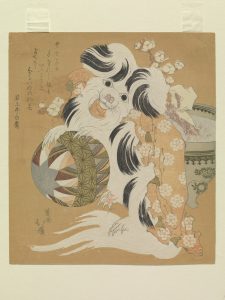
Pekinese dog with decorative ball.
Totoya Hokkei. Japan, 1826 © Trustees of the Chester Beatty Library, Dublin
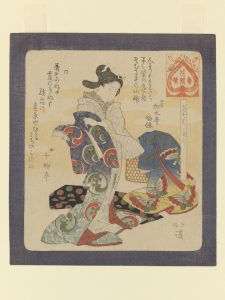
Series for the Hanazono Group: It is good to dress in new clothes.
Totoya Hokkei. Japan, c. 1824 © Trustees of the Chester Beatty Library, Dublin
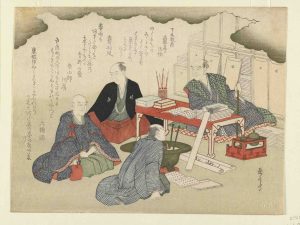
Masazumi, Hakaze and Ab? visiting Rokujuen
Yashima Gakutei
Woodblock print
Japan, c. 1819 © Trustees of the Chester Beatty Library, Dublin
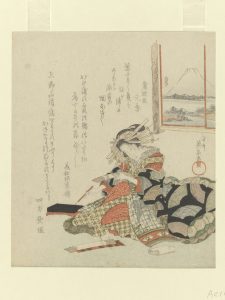
Courtesan preparing to inscribe a poem slip
Keisai Eisen
Woodblock print
Japan, early 1820’s © Trustees of the Chester Beatty Library, Dublin