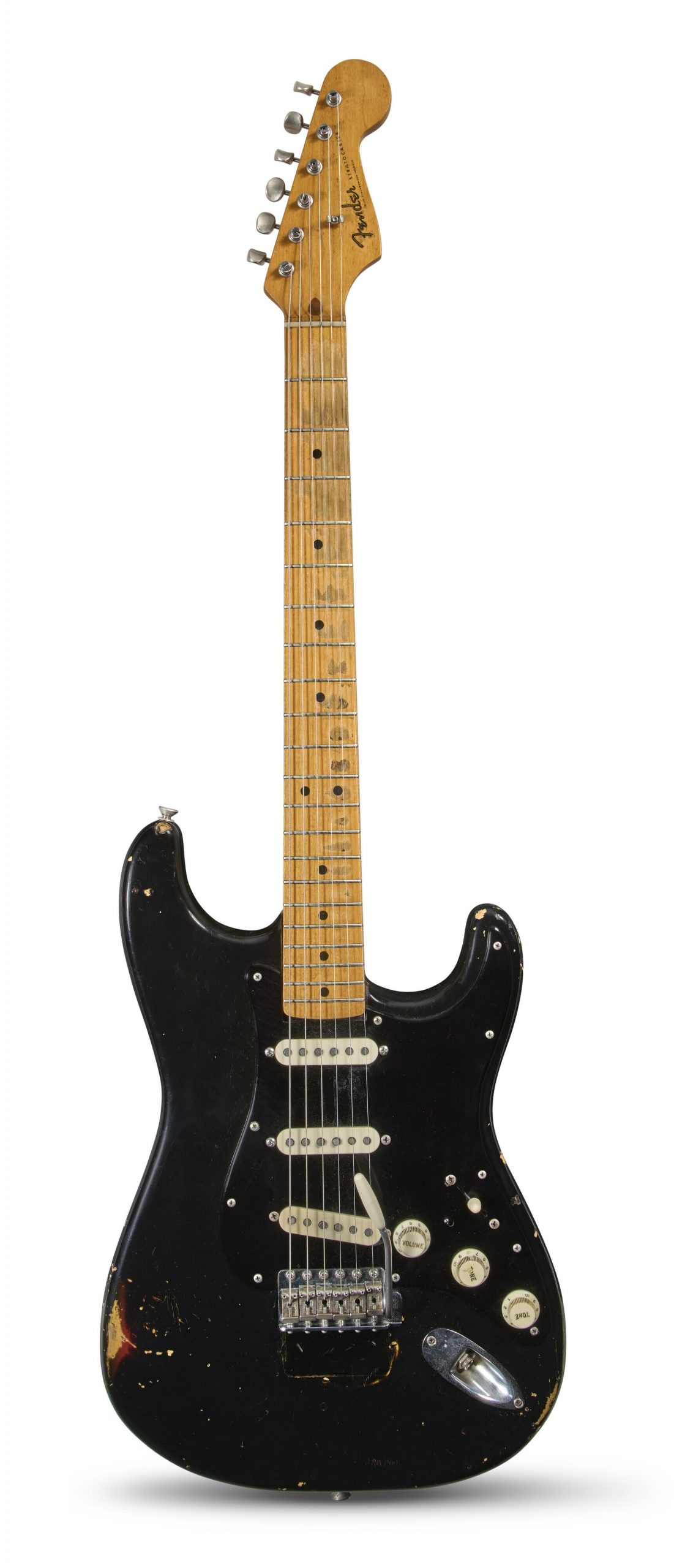
Meet the most expensive guitar ever sold. David Gilmour’s 1969 Fender Stratocaster – nicknamed the “Black Strat” – was played on all six of Pink Floyd’s albums between 1970 and 1983. Among them were The Dark Side of the Moon, Wish You Were Here and The Wall. It made $14.6 million (€12.73 million) at Christie’s auction of the Jim Irsay Collection in New York where 44 lots made 373% times the low estimate. The auction brought in $84 million (€73.25 million). A piano owned by John Lennon made $3.2 million (€2.79 million). The previous record for a guitar was Kurt Cobain’s 1959 Martin D-18E played during Nivana’s legendary MTV unplugged performance in 1993 which sold for $6 million (€5.23 million) in 2020.
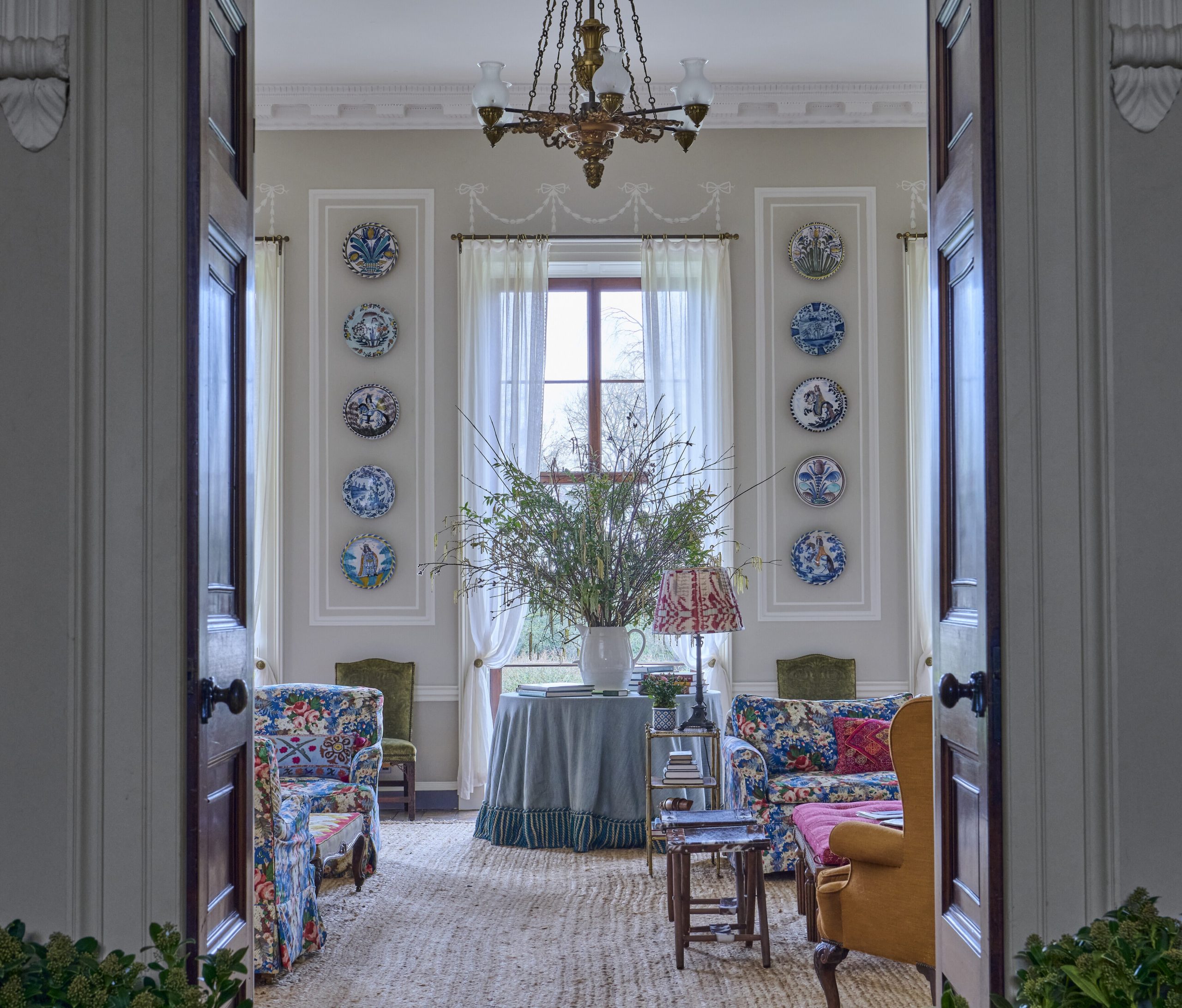
An interior view at Ardbraccan, Co. Meath. Courtesy Christie’s Images Ltd., 2026. UPDATE: LOTS FROM ARDBRACCAN IN THE SALE REALISED £1.2 MILLION
Heartening to see an Irish house making waves on the international decorative arts and interiors markets. A carefully curated selection of beautiful English and Irish decorative arts from Ardbraccan House, a Palladian mansion in Co. Meath, will feature at Christie’s Collections London sale online from April 1-15. It has been home for over a decade to celebrated interior designer Serena Williams-Ellis and her partner Charles Noell.
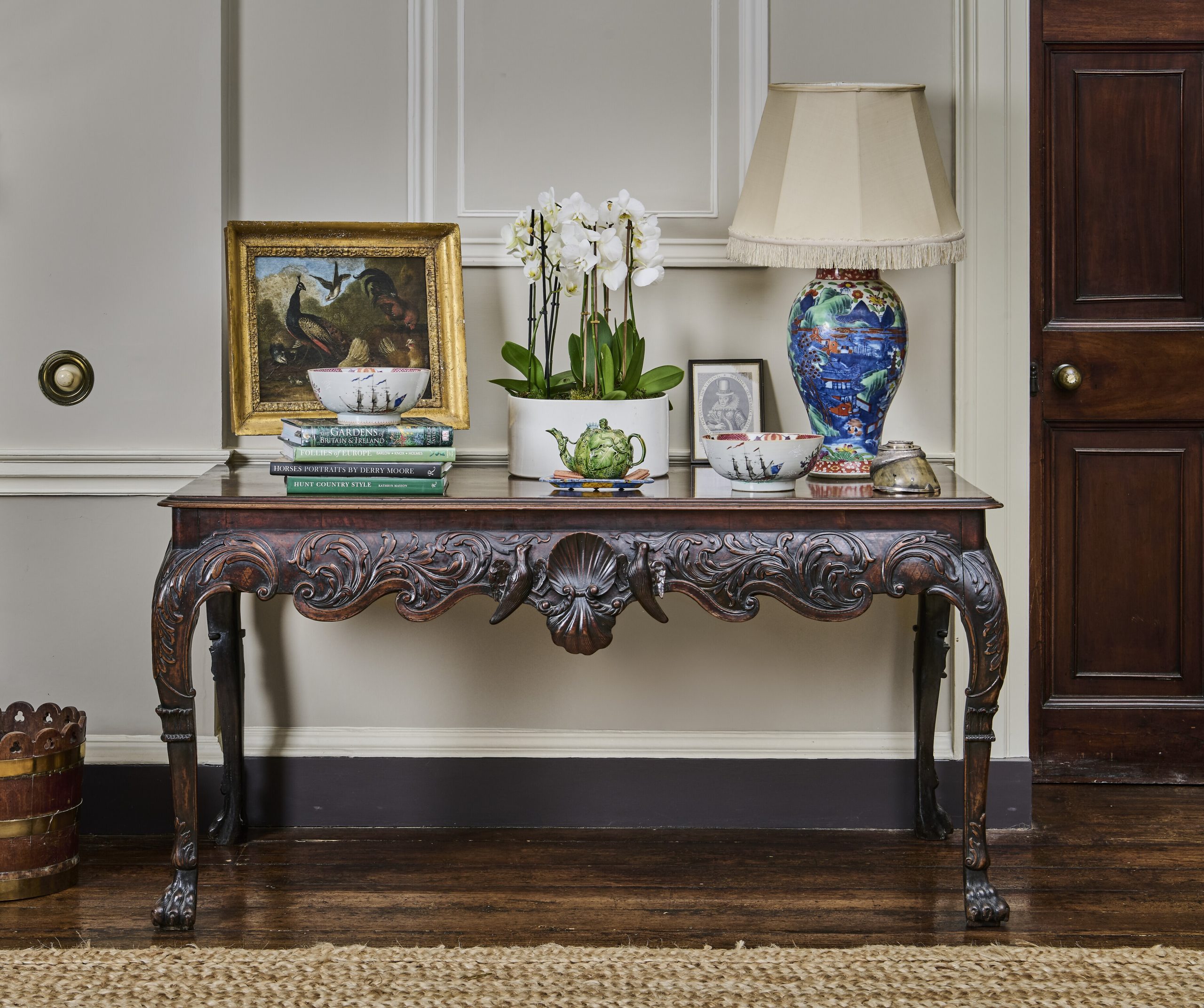
An Irish George II side table from the mid 18th century is estimated at £40,000-£60,000 (€46,170-€69,250). A set of five mid 18th century leather fire buckets from the collection of the Dukes of Leinster at Carton House (£2,000-£3,000)(€2,308-€3,462), a portrait of Sophia Southwell, nee Campbell later Lady de Clifford by Sir Joshua Reynolds (£30,000-£50,000)(€34,630-€57,710) and a group of sporting pictures led by horse paintings by John E Ferneley Senior all feature.
Serena Williams-Ellis, who likes a house to smile, said: “The collection at Ardbraccan was organic in its formation over the years. I wished to get the balance of being grand enough for the house but in no way was it to feel austere, the all important thing was to feel as if it had always been there and was comfortable as it sat within the house. I wanted all things in our collection to have the charm factor – something of beauty or to make you smile. Ardbraccan under our tenure became a Stud Farm”.
Mid 18th century Irish George II side table from Ardbraccan Courtesy Christie’s Images Ltd., 2026. UPDATE: THIS MADE £76,200
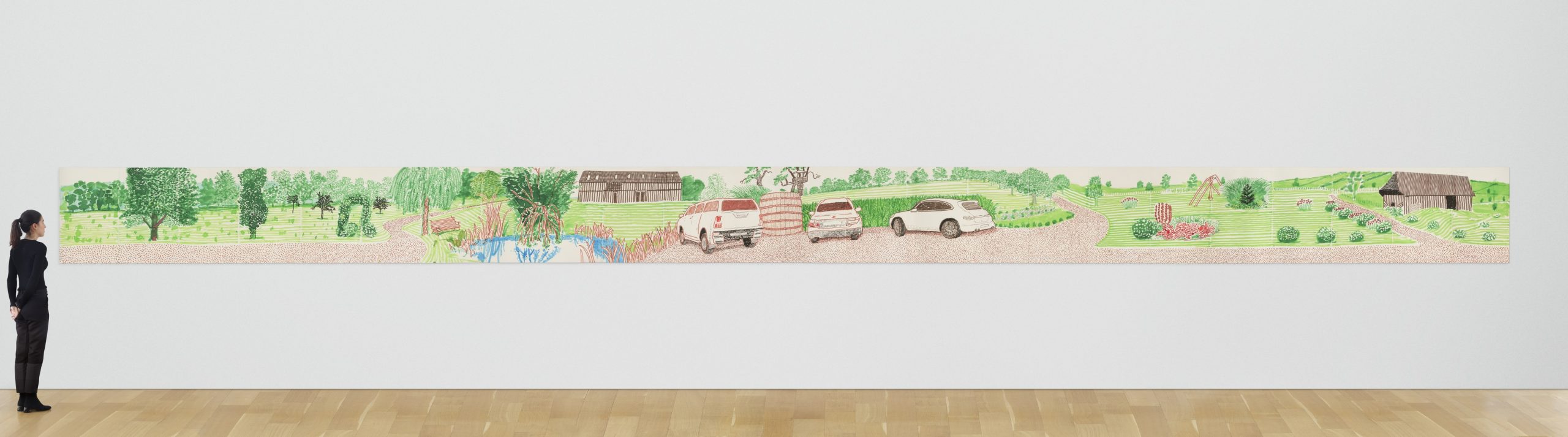
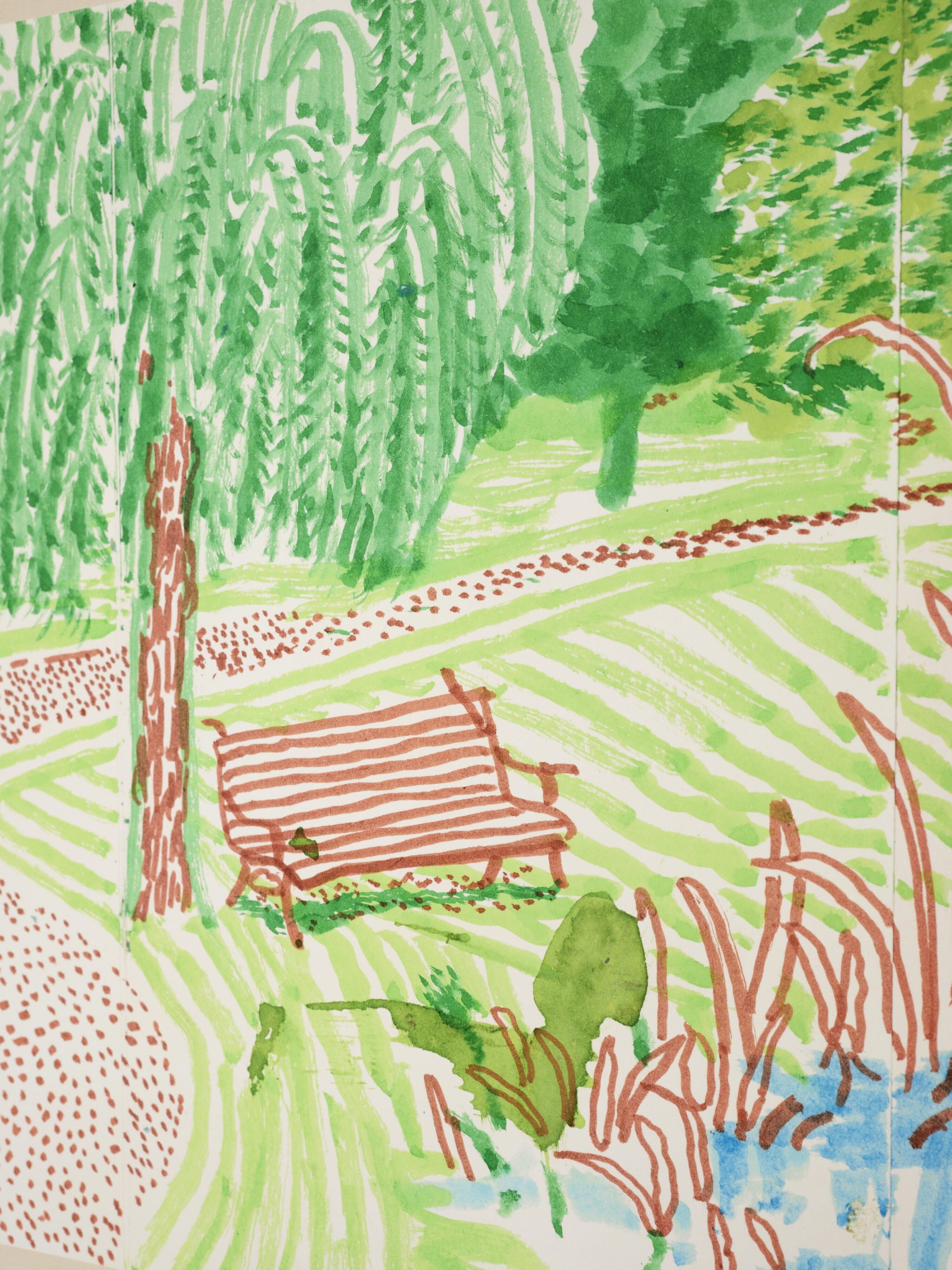
David Hockney, Autour de la maison, été (2019). Courtesy Christie’s Images Ltd., 2026. UPDATE: THIS WAS UNSOLD
David Hockney’s monumental Autour de la maison, été (2019) measuringan astonishing 12 metres in length will headline Christie’s Contemporary Edition London sale from March 17-31. The estimate is £200,000-300,000. Printed on a single sheet of paper, it is one of the largest works ever created by the artist, and his largest editioned print. It depicts Hockney’s home in Normandy, France, with his garden in the height of summer, the vibrant greens of the grass, trees and hedgerows in contrast with the architecture of the medieval barns and contemporary elements such as a swing set, treehouse and parked vehicles.
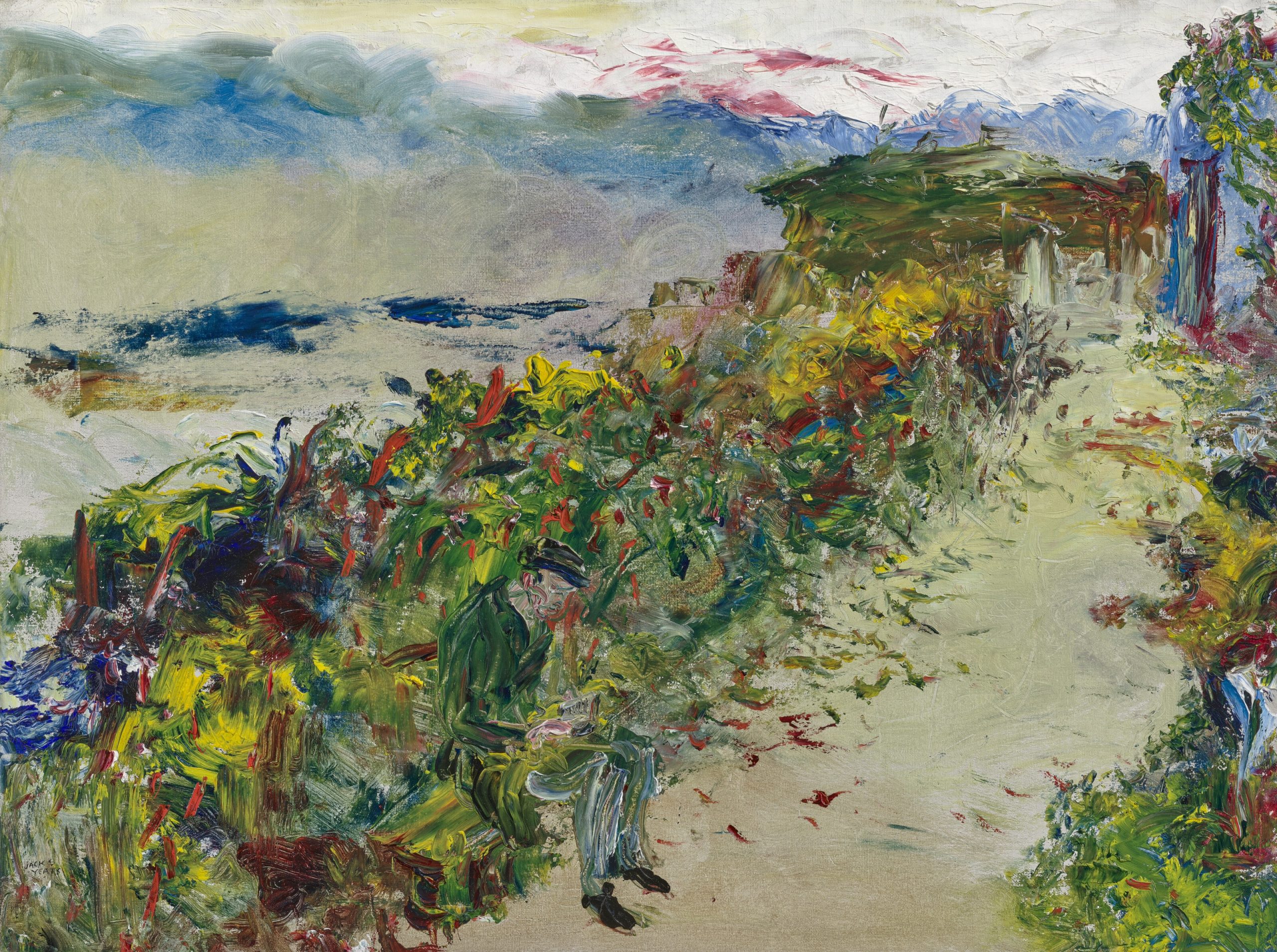
Jack Butler Yeats – A Storm / Gaillshíon (1936) Courtesy Christie’s Images Ltd. UPDATE: THIS MADE £165,100
At auction for the first time this painting by Yeats will lead Christie’s day sale of Modern British and Irish art in London on March 19. A Storm/Gaillshíon depicts a young man seated on a bench at the side of a sandy pathway overlooking the sea. According to the artist, this scene refers to no particular, identifiable place, but rather is intended to be indicative of a typical Irish coastal scene, a familiar landscape visible throughout the island. The secondary title of the work, the Irish word Gaillshíon, conjures a rich impression of the atmospheric conditions of the day, suggesting the coastline is being buffeted by rough, blustery weather. The estimate is £100,000-£150,000.
Irish art in the sale includes work by Yeats, Henry and Roderic O’Conor. Also at auction for the first time is Lavery’s After Breakfast, Tangier, which features in the evening sale on March 18. The estimate is £180,000-£250,000.
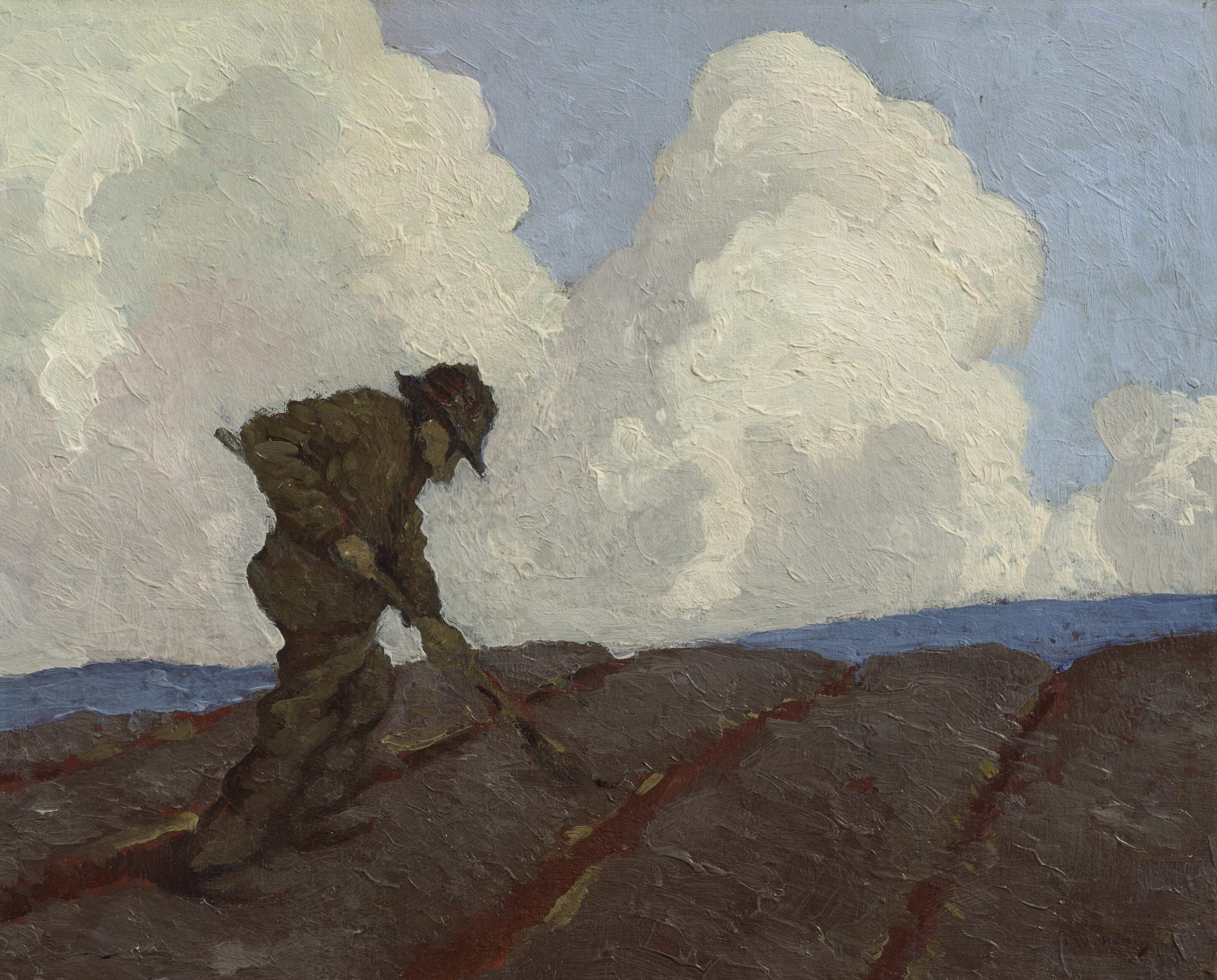
Paul Henry – Digging Potatoes, Achill Island, Co. Mayo, 1916-19(£85,000-£120,000). UPDATE: THIS MADE £107,950
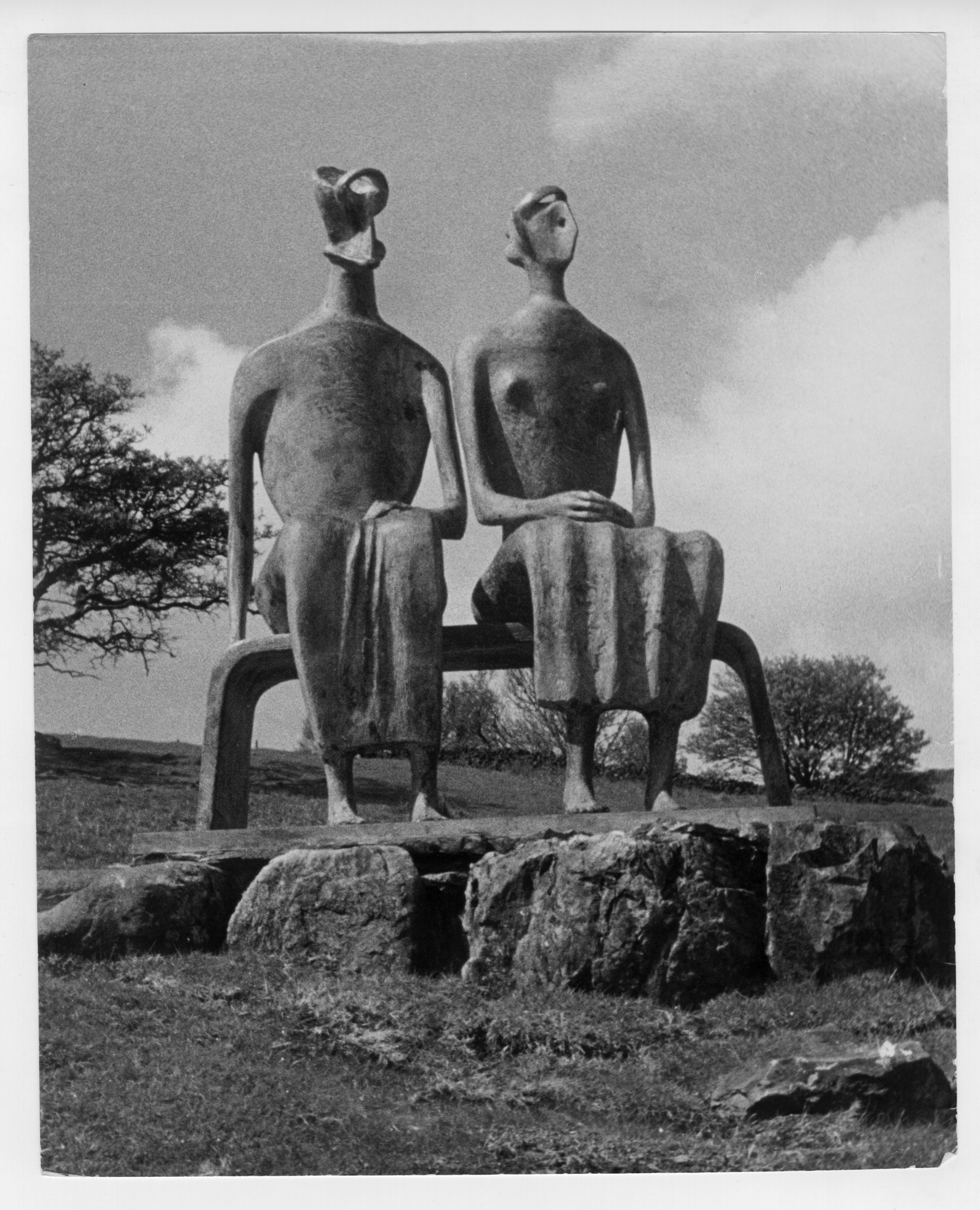
There was a new world record for Henry Moore at Christie’s London 20/21 evening sale when King and Queen sold for £26,345,000. This was 76% above the high estimate. The result came after a bidding battle that went on for almost eight minutes with six bidders in the room. It is the highest selling lot of the London season. The sale generated a total of £114,175,900 a 39% increase on the total achieved last year, with 92% of lots sold by lot and 98% by value. Three evening sales brought in £197,472,600, up 52% on last year.
The Art of the Surreal Evening Sale, celebrating its 25th edition this season was 100% sold by lot and value and generated a total of £42,978,950. It set two significant world auction records: Dorothea Tanning’s Children’s Games (1942) realised £4,686,000, while Toyen’s Le devenir de la liberté (1946) achieved £3,710,000.
Modern Visionaries – The Roger and Josette Vanthournout Collection made £40,317,750, selling 97% by lot and 94% by value. The three evening sales generated £197,472,600.
(See post on antiquesandartireland.com for February 13, 2026)
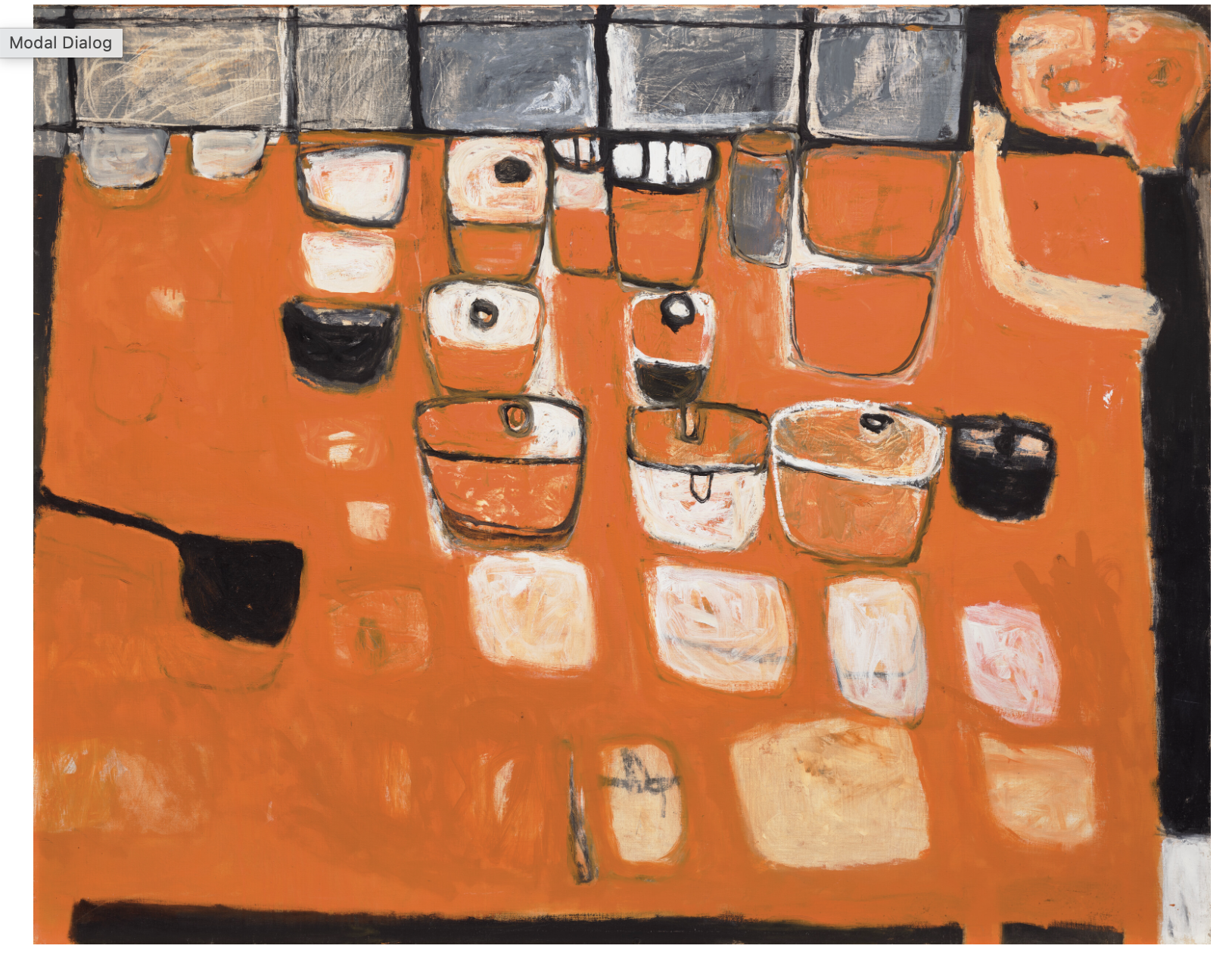
WILLIAM SCOTT, R.A. (1913-1989) – Orange Still Life with Figure. UPDATE: THIS SOLD FOR £247,650
William Scott’s Orange Still Life with Figure dates to 1956/7 and comes up at Christie’s Modern British and Irish Art evening sale in London on March 18. The oil on canvas is from an American collection and estimated at £50,000-£350,000. The auction is led by Frank Auerbach’s Christmas Tree at Mornington Crescent (2004–05) described as a triumphant celebration of paint’s power to capture a landscape rich in memory. The estimate is £1.5 million – £2 million. There are 26 lots in the sale.
Wassily Kandinsky – Le rond rouge (The red circle) (1939). UPDATE: THIS SOLD FOR £12,545,000
Wassily Kandinsky’s large scale canvas Le rond rouge (1939) is a highlight at Christie’s 20th/21st century evening sale in London on March 5. It is considered to be one of the most striking works from the final phase of his careeer. Created while the artist was living in Paris with his wife Nina, Le rond rouge captures the vibrancy and dynamism of his mature abstract language at a moment of profound artistic renewal.
After leaving Germany in 1933 to escape the increasingly hostile political climate, Kandinsky settled in Paris, where he immersed himself in the fervent avant-garde art circles of the city. His Parisian years were also marked by a significant shift in style, as he developed a new visual vocabulary that pushed his work in unexpected directions. It remained in his collection until his death in 1944 and has had an extensive exhibition history. Most recently Le rond rougewas on long-term loan to The Courtauld Gallery in London for sixteen years, between 2002-2018. The estimate is £10,500,000-15,500,000.
A photograph sent to Christie’s request an auction estimate portal by an unsuspecting owner resulted in a $27.2 million (€23.02 million) sale in New York last week. The previously unknown red chalk study for a foot of the Libyan Sibyl in the Sistine Chapel made nearly 20 times its low estimate and set a record for a Michelangelo drawing. It measures just five and a quarter inches in height. A black chalk study for a leg with bent knee is on the back. Christie’s specialist Giada Damen identified it as an original drawing by Michelangelo, done in preparation for the right foot of the monumental figure at the far east end of the ceiling of the Sistine Chapel. The art brought multiple bidders in the room, on the phone and online to a 45 minute bidding battle at the sale of Old Master and British Drawings.
Henry Moore’s seminal work King and Queen will be a highlight at Christie’s 20th/21st Century: London evening sale on March 5. It has been in the same British collection for the past 70 years. Conceived in 1952–53, the sculpture was first cast in an edition of four plus an artist’s cast. This is the only remaining example still in private hands; all other casts are held in major public collections, including the Moa Museum of Art, Atami; the Hirshhorn Museum and Sculpture Garden, Washington D.C.; the Middelheim Museum, Antwerp; and the Norton Simon Museum, Pasadena. Two subsequent casts were produced specifically for the Tate Collection (1957) and The Henry Moore Foundation (1985). The estimate is £10 million – £15 million.
The unsettling ambiguity of La plaine de l’air (1940) by Magritte resonated strongly with critics when exhibited at Galerie Dietrich in Brussels in 1941. Painted at a moment when Europe was being engulfed by conflict it shows a single oversized leaf grafted onto a trunk set against a stark mountain landscape. The leaf, one of Magritte’s most distinctive and recurring motifs, introduces a solitary, watchful presence and channels all the tension of the early Second World War. Estimated at £3.5-£5.5 million (€4.03-€6.33 million) it features at Modern Visionaries – the Roger and Josette Vanthournout Collection at Christie’s in London on March 5 and 6 plus an online auction. Assembled over six decades their collection, with an overall estimate is in the region of £40 million (€46 million), spans almost 150 years and ranges from symbolism, Belgian expressionism and surrealism to post war avant garde, minimalism to modern and contemporary British art. UPDATE: THIS WAS UNSOLD