antiquesandartireland.com

Information about Art, Antiques and Auctions in Ireland and around the world
  • ABOUT
  • About Des
  • Contact
  • Posts Tagged ‘Rijksmuseum’

    ADRIAEN van den VELDE AT THE RIJKSMUSEUM

    Tuesday, August 2nd, 2016

    This summer the Rijksmuseum in Amsterdam is staging the first ever major retrospective of work by Adriaen van de Velde (1636-1672), one of the greatest landscape painters of the Golden Age. The exhibition features sixty paintings, preliminary studies and drawings by the talented artist, who died tragically young. They come from private collections and from museums including the Louvre, the Gemäldegalerie Alte Meister in Kassel, Museo Thyssen Bornemisza Madrid, the Mauritshuis and the British Museum.  Here is a small selection:

    A Recumbent Cow and Three Sheep, Adriaen van de Velde, c. 1671

    A Recumbent Cow and Three Sheep, Adriaen van de Velde, c. 1671

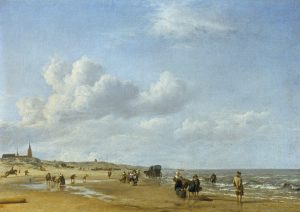
    The beach at Scheveningen, Adriaen van de Velde, 1658.

    The beach at Scheveningen, Adriaen van de Velde, 1658.

    Couple in a Landscape, Adriaen van de Velde, 1667.

    Couple in a Landscape, Adriaen van de Velde, 1667.

    JOINT ACQUISITION OF TWO REMBRANDT PORTRAITS

    Tuesday, February 2nd, 2016
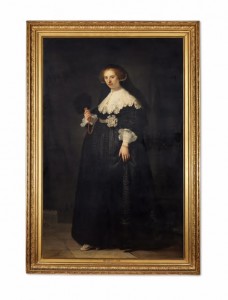
    rem husbandrem wifeThe first ever joint acquisition of two Rembrandt masterpieces by the French and Dutch states was facilitated through Christie’s private sale channel.  The acquisition cost the Louvre 80 million euro and is the largest ever made by a French museum.  They were acquired from the French branch of the Rothschild family. The portraits of Maerten Soolmans and his wife Oopjen Coppit were executed a year after the couple’s wedding in 1634.   They will always be shown together, alternately at the Louvre and the Rijksmuseum, but will be owned separately.  They will be exhibited publicly for the first time at the Louvre in a few weeks time.  They will then be shipped to Holland for restoration.

    ALL VERSIONS OF GIRL IN A KIMONO AT RIJKSMUSEUM

    Wednesday, January 6th, 2016

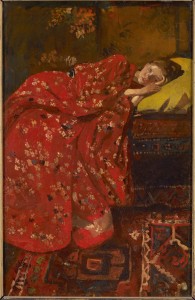
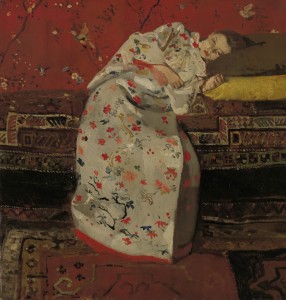
    An upcoming exhibition at the Rijksmuseum in Amsterdam will bring together for the first time all versions of Girl in a Kimono by the Rotterdam born artist George Hendrick Breitner.  Regarded as an icon of Japonism the works emerged between 1893 and 1896.  The exhibition, which runs from February 20 to May 22, displays the full series of 14 paintings. Included is a hitherto unknown Girl in a Red Kimono from a private collection.  The exhibition will include drawings, sketches and photographs used by the artist in preparation.

    The sitter was Geesje Kwak who posed for the painter between the ages of 16 and 18. From a Zaandam family of bargees she moved to Amsterdam in 1880. Her young, innocent face and slender body contribute significantly to the appearance of delicate sensuality that characterises the entire series.  She posed alternately in a red, a white and a blue Japanese kimono. From the time of his stay in Paris in 1884, where Japonism dominated the fashion scene, Breitner was fascinated by Japanese art.

    George Hendrik Breitner - Girl in a red kimono.

    George Hendrik Breitner – Girl in a red kimono.

    George Hendrik Breitner - Girl in white kimono.

    George Hendrik Breitner – Girl in white kimono.

    BLOCKBUSTER ASIAN TREASURES SHOW TO OPEN AT RIJKSMUSEUM

    Wednesday, August 12th, 2015

    The excitement created by Asian treasures shipped to Holland during the Golden Age is the subject of an upcoming blockbuster show at the Rijksmuseum in Amsterdam.  Asia in Amsterdam Exotic luxury in the Golden Age runs from October 17 to January 17, 2016.  Lacquer work, ivory, silver, silk, ebony, jewellery and enormous quantities of porcelain poured into Amsterdam, the then bustling ‘capital of the world’, to enrich the interiors of the increasingly prosperous Dutch bourgeoisie.

    Chinese blue-and-white porcelain was especially popular. It was much thinner, smoother and lighter than the earthenware made in Holland. The making of earthenware was soon refined in Delft, leading to the famous ‘Delft Blue’, with Chinese origins. Coloured Japanese porcelain first appeared around 1660, imported by Dutch East India Company officials returning from the Far East. This created another sensation and, 20 years later, the exclusive and therefore expensive Kakiemon porcelain was the big favourite among the Dutch elite.  Dutch interiors changed enormously under the influence of the treasures from Asia. Porcelain was displayed on specially designed shelves and consoles. Imported silk and cotton introduced much more colour and variation in the shape of bedspreads, curtains and wall tapestries.

    With 170 objects from China, Japan, India and Batavia the exhibition presents many 17th century paintings: still-lifes and portraits of citizens who had themselves painted among their newly acquired items of Asian luxury. It is being organised in cooperation with the Peabody Essex Museum in Salem, USA. The loan items originate in Moscow, St Petersburg, Versailles, London, Oxford, Madrid and Stockholm.

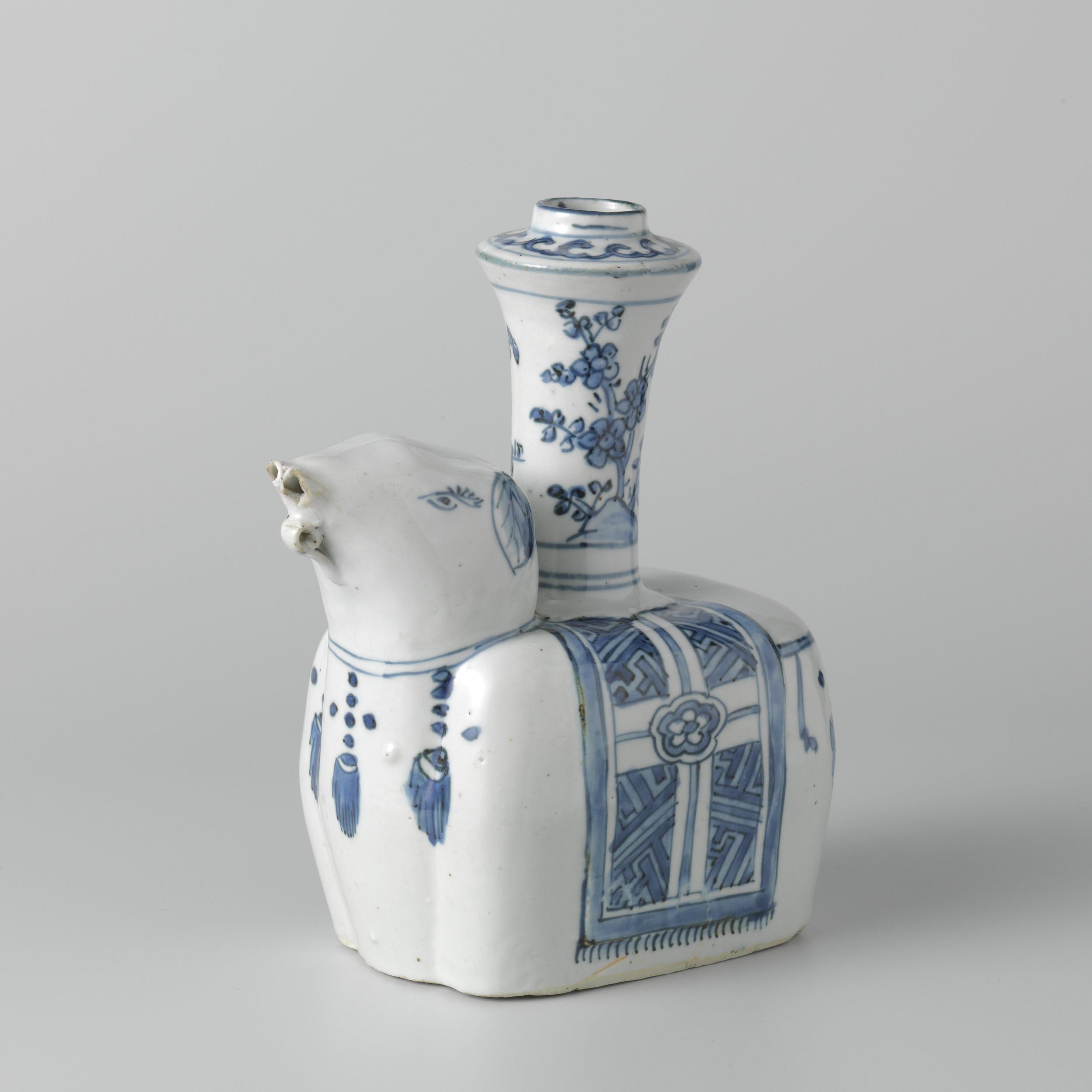
    Kendi, anonymous, 1580 - 1620

    Kendi, anonymous, 1580 – 1620

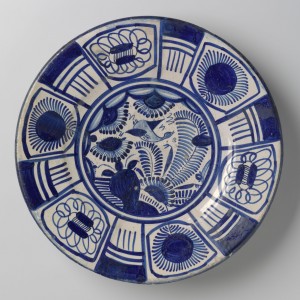
    Majolica, anonymous c1630-1650.

    Majolica, anonymous c1630-1650.

    Cat. 40b Chest. Japan, 1635–1645. Wood covered in black and red lacquer, with gold and silver hiramaki-e and takamaki-e lacquer, gold and silver foil, mother-of-pearl, crystal, and silver and copper fittings. 28 1/8 × 56 1/4 × 26 5/8 inches (71.5 × 143 × 67.5 cm). State Historical Museum, Moscow.

    Cat. 40b Chest. Japan, 1635–1645. Wood covered in black and red
    lacquer, with gold and silver hiramaki-e and takamaki-e lacquer,
    gold and silver foil, mother-of-pearl, crystal, and silver and
    copper fittings.
    State Historical Museum, Moscow.

    Cabinet on stand. Cabinet, Japan, 1600–1630; stand, Japan, incorporating elements from a Dutch table, 1625–1650. Oak and Chinese arborvitae covered in black lacquer, with gold and silver hiramaki-e, ray-skin denticles, mother-of-pearl, and gilt copper mounts. Peabody Essex Museum, Salem,

    Cabinet on stand. Cabinet, Japan, 1600–1630; stand, Japan,
    incorporating elements from a Dutch table, 1625–1650. Oak
    and Chinese arborvitae covered in black lacquer, with gold
    and silver hiramaki-e, ray-skin denticles, mother-of-pearl, and
    gilt copper mounts. Peabody Essex Museum, Salem,

    Bedcover:  Palampore. Deccan, India, 1710–1750. Cotton embroidered  with silk and metal-wrapped threads. Peabody Essex Museum, Salem,

    Bedcover: Palampore. Deccan, India, 1710–1750. Cotton embroidered
    with silk and metal-wrapped threads. Peabody Essex Museum, Salem,