antiquesandartireland.com

Information about Art, Antiques and Auctions in Ireland and around the world
  • ABOUT
  • About Des
  • Contact
  • Posts Tagged ‘National Gallery of Ireland’

    PICASSO EXHIBITION AT NATIONAL GALLERY OF IRELAND NEXT YEAR

    Wednesday, November 6th, 2024

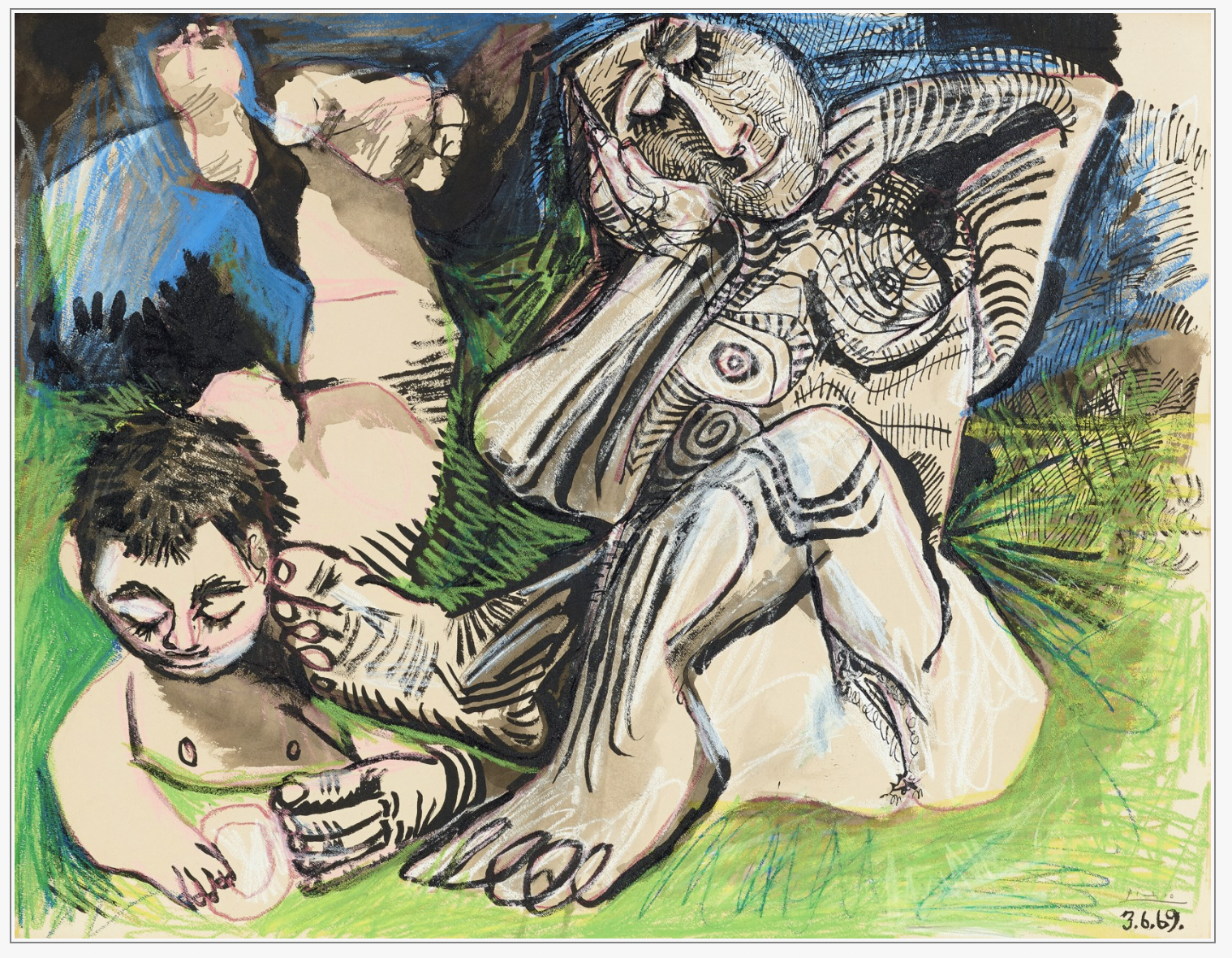
    PABLO PICASSO (1881-1973) – Femme et jeune garcon nus

    A retrospective of Picasso will be among the highlights of next year’s programme at the National Gallery of Ireland. The gallery, in collaboration with the Musée Picasso national-Paris, will present Picasso: From the studio from October 11, 2025 to February 22, 2026. Picasso lived surrounded by his art. His personal life and his work, his homes and his studios were always intimately linked. This exhibition places Picasso in the context of his studios, highlighting the various facets and phases of his art and life. It will explore the key locations that defined him, from his arrival in Paris at the start of the twentieth century to his studio in Villa La Californie (1955-1961) in Cannes. It will feature paintings, sculptures, ceramics, and works on paper, as well as photographic and audio-visual works. Pictured here is a 1969 work on paper entitled Femme et jeune garcon nus which comes up at Christie’s 20th century evening sale in New York on November 19 with an estimate of $1 million – $1.5 million. 

    MILDRED ANNE BUTLER AT THE NATIONAL GALLERY OF IRELAND

    Wednesday, September 11th, 2024

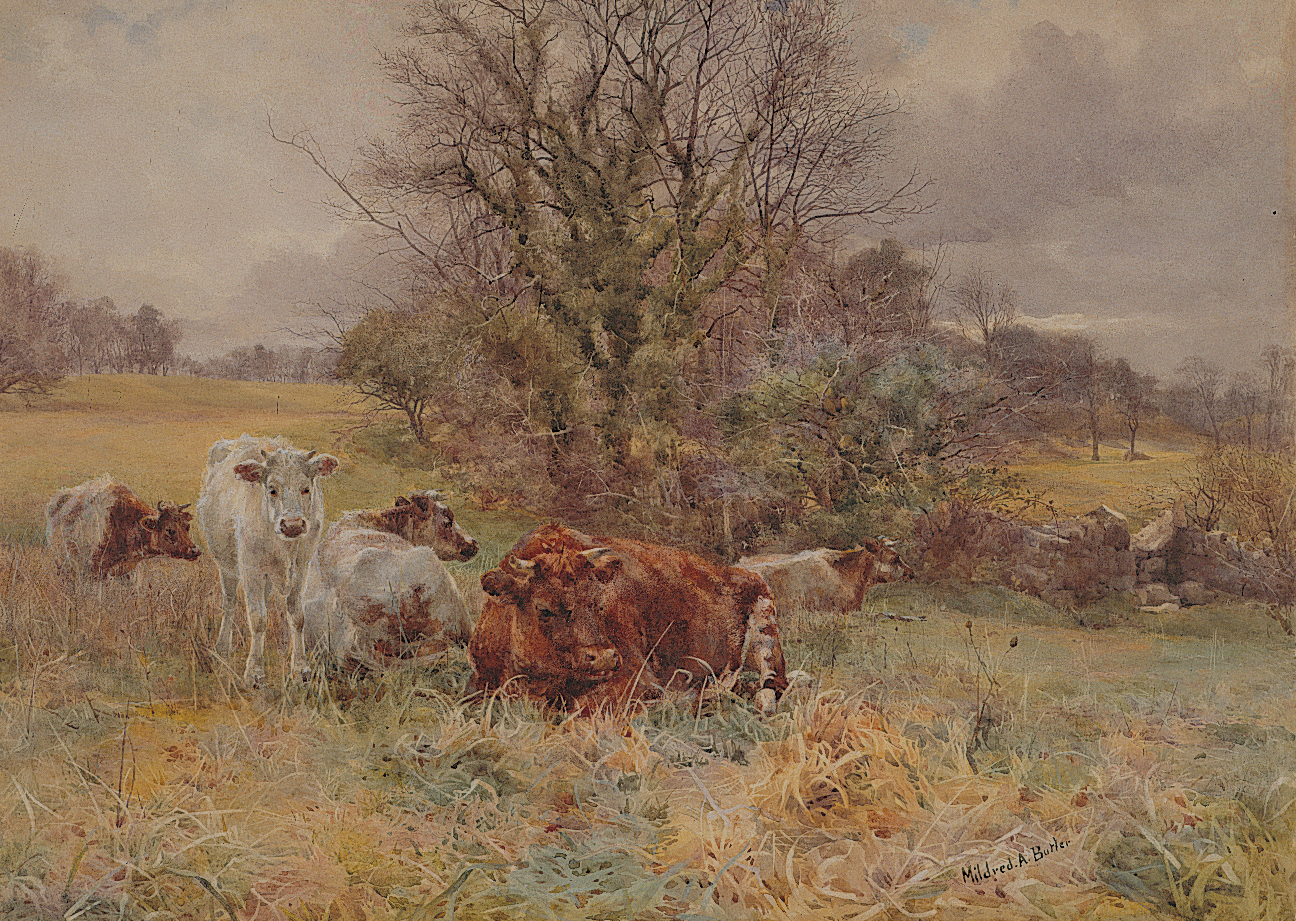
    Mildred Anne Butler, 1858 – 1941 – A Sheltered Corner – Courtesy of National Museums NI, Ulster Museum Collection.

    Mildred Anne Butler: At Home in Nature opens at the National Gallery of Ireland on September 14 and will run until next January 5. This new display of the art of one of Ireland’s first professional women artists is part of the Gallery’s broader effort to celebrate the contributions of Irish women artists. It showcases 16 watercolours, drawn from public and private collections across the island of Ireland, along with a selection of archival material, on loan from Trinity College Dublin, which provide further insights into her life as a working artist. Mildred Anne Butler was born and raised at Kilmurry, a grand mid-18th-century manor house near Thomastown, County Kilkenny. The 350-acre estate provided her with an endless source of inspiration, and a wealth of exquisite colour to paint. Her work captures the essence of her immediate environs with both striking accuracy and a sense of fresh immediacy. She is best known for her sumptuous garden scenes, as well as her detailed depictions of animals and birds, which she cleverly imbued with subtleties of character.

    NEW BOOK ON CONSERVING CANVASES AT IRELAND’S NATIONAL GALLERY

    Wednesday, August 28th, 2024
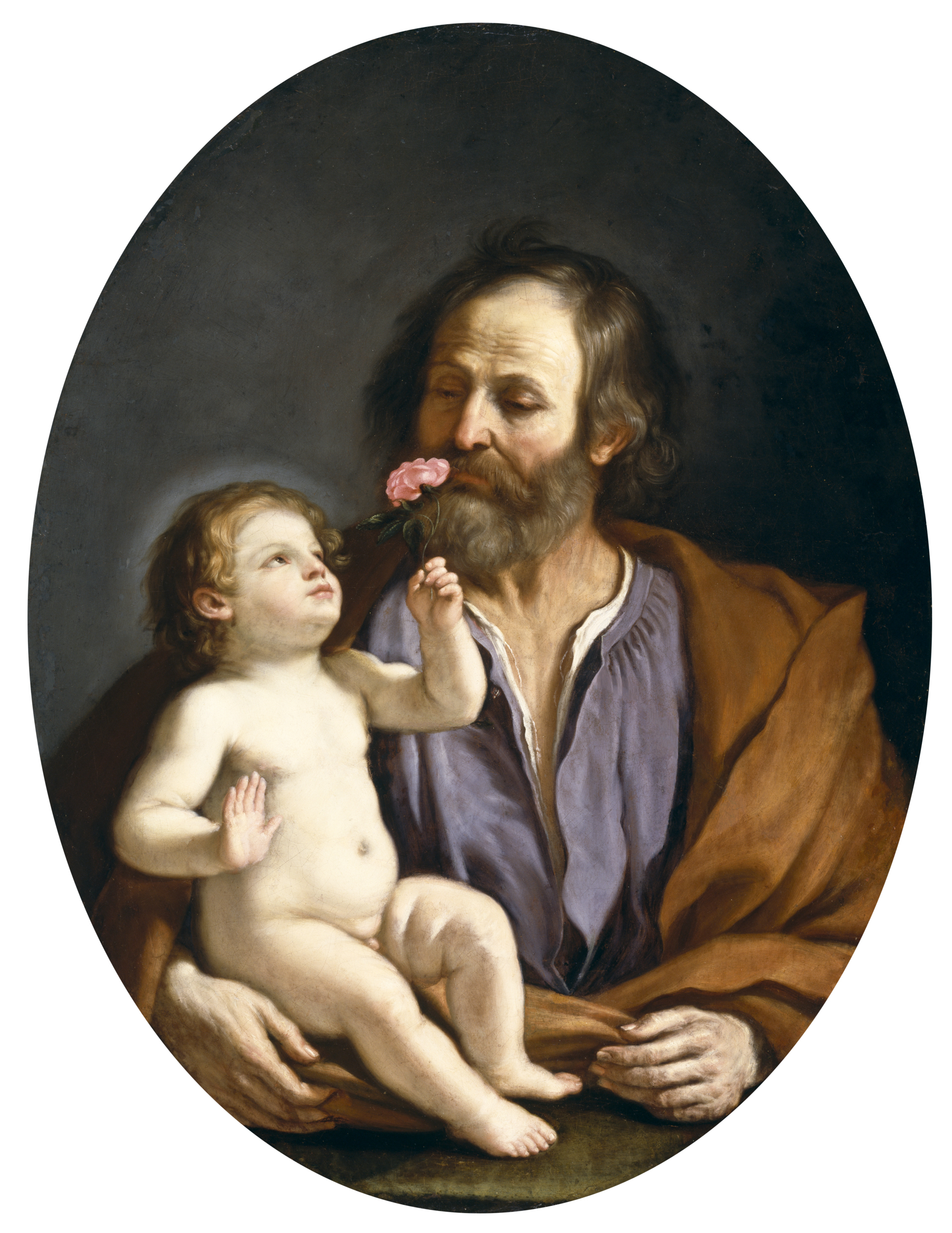
    Saint Joseph with the Christ Child, c.1637, Artist: Guercino (1591-1666). National Gallery of Ireland, Purchased 1882

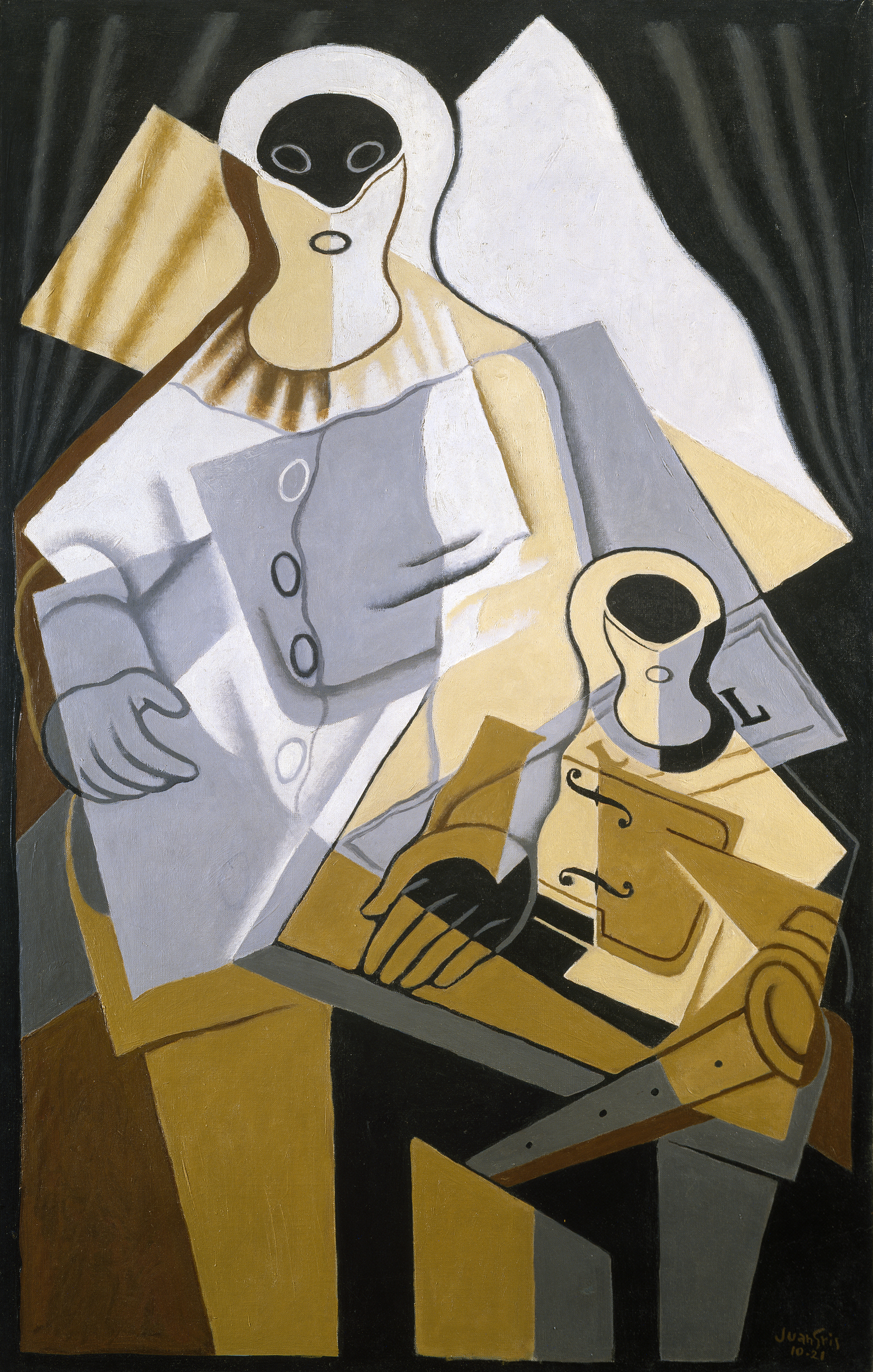
    Guercino & Gris: Conserving Canvas from Different Eras, which explores historical and modern conservation treatments on works of art, has just been released by the National Gallery of Ireland. It focuses on three works from the National Gallery of Ireland’s collection: Saint Joseph with the Christ Child (c.1637), by Giovanni Francesco Barbieri, known as Guercino (1591-1666), and two collages A Guitar, Glasses and a Bottle and Carafe, Cups and Glasses (1914), by Juan Gris (1887-1927), which was initially one double-sided artwork.

    The 64-page hardback publication explores structural conservation treatments on works of art and the changing approaches to these treatments over time. It discusses treatments and processes informed by research carried out by the National Gallery of Ireland’s new Scientific Research Laboratory, and how scientific advancements in conservation are contributing to the care of the collection. The publication marks the completion of the conserving canvas project at the National Gallery, made possible by a grant from the Getty Foundation. It is available to purchase online and in-shop at the gallery priced €29.50. 

    Juan Gris (1887 – 1927) – Pierrot (1921) –  Bequeathed, Máire MacNeill Sweeney, 1987

    REMBRANDT ETCHING ENTERS NATIONAL COLLECTION IN IRELAND

    Friday, August 9th, 2024

    Rembrandt van Rijn (1606-1669) – Landscape with Cottages and a Hay Barn, (1641). Etching with touches of drypoint on paper. Image, National Gallery of Ireland
    An etching by Rembrandt van Rijn (1606-1669) – Landscape with Cottages and a Hay Barn (1641) – has been acquired by the National Gallery of Ireland and is the first work on paper by Rembrandt to enter the national collection. The gallery is celebrating its 170th anniversary by announcing recent acquisitions, free tours and releasing free tickets to ‘Women Impressionists’ for Culture Night 2024. Hughie O’Donoghue’s monumental Original Sins (2022), commissioned under the Decade of Centenaries Programme, has been acquired as a heritage gift under Section 1003. A vibrant oil on canvas by Dairine Vanston, On Huband Bridge, Dublin (1974), records a Dublin landmark just a few minutes’ walk from Vanston’s home and studio on Mount Street Crescent, but suggests more tropical climes. 
    A new strategic plan for 2024-2028 includes a range of priorities which will build on the Gallery’s existing work and help it evolve to best serve its collections and audiences, in the future. Four new priorities have been identified: Developing and caring for our living collections for public benefit; a National Gallery for all; excellence in Corporate Services and Strategic Partnerships to grow national and international partnerships and income streams across the public and private sectors.

    Hughie O’Donoghue (b1953) – Original Sins series in the Shaw Room of the National Gallery. Photo courtesy National Gallery of Ireland.

    WOMEN IMPRESSIONISTS AT THE NATIONAL GALLERY OF IRELAND

    Tuesday, June 25th, 2024

    Mary Cassatt – Child in a Straw Hat, c.1886. Courtesy National Gallery of Art, Washington.

    Women Impressionists, a special exhibition marking the first impressionist exhibition in 1874, is at the National Gallery of Ireland from June 27 to October 6. Women Impressionists will include around 60 fascinating works drawn from collections worldwide. It focusses on on four women artists who were integral to Impressionism – Berthe Morisot (1841-1895), Eva Gonzalès (1849-1883), Marie Bracquemond (1860-1914), and Mary Cassatt (1844-1926). All but Eva Gonzales exhibited at Impressionist exhibitions (of which there were eight over the following 12 years). 

    Impressionist artists are renowned for using friends and family members as models. This is especially so for women Impressionists, who had relatively restricted access to professional models and social spaces. They often painted scenes from everyday life in the quiet intimacy of their homes and gardens. These artists did not only look inwards but they travelled widely, they looked to contemporary art and to art history; they were engaged in the artworld and made visits to studios, exhibitions, and galleries.

    Women Impressionists explores how each of these artists navigated complex personal and professional networks to create and exhibit their art. It highlights their collective desire to make modern art and shows how they interpreted the evolving idea of Impressionism in individual ways.

    Highlights include an exceptional portrayal of an intimate domestic scene, The Artist’s Daughter, Julie, with her Nanny, c.1884. by Berthe Morisot (Minneapolis Institute of Art). The painting shows the artist’s daughter Julie watching her nanny sewing. Marie Bracquemond’s painting Le Goûter, c.1880 (Musée du Petit Palais)is set on the terrace of the Villa Brancas, the artist’s home in Sèvres. Mary Cassatt was one of the most original painters of women and children in the 19th-century. Her painting Susan Comforting the Baby, c.1881 (Columbus Museum of Art) shows a young woman soothing one of the artist’s infant nieces or nephews. In keeping with her Impressionism, Cassatt has left areas of canvas unpainted, and others sketched in with loose visible brushstrokes.

    Dr Caroline Campbell, Director of the National Gallery of Ireland, said: In an anniversary year for the National Gallery of Ireland, as we celebrate our 160th birthday, it is very exciting to mark another important anniversary in the history of art by bringing this exhibition to Ireland. 150 years on from the first Impressionist exhibition in Paris, we look forward to opening our doors to visitors from Ireland and abroad to discover works by these four women artists. The works in our permanent collection by Berthe Morisot and Eva Gonzalès are firm favourites of our audiences so we hope that this exhibition will delight and intrigue throughout the summer.”

    The exhibition was devised by Ordrupgaard, Denmark, where it was on display from February 9 to May 20, 2024.

    Berthe Morisot – The Artist’s Daughter, Julie, with her Nanny, c. 1884 Minneapolis Institute of Art, The John R. Van Derlip Fund. Courtesy Minneapolis Institute of Art. Licenced under CC BY 4.0

    VERMEERS REUNITED AT THE NATIONAL GALLERY OF IRELAND

    Wednesday, May 8th, 2024

    Johannes Vermeer, (1632–1675)  – Mistress and Maid, ca. 1666?67.  The Frick Collection, New York, photo: Joseph Coscia Jr.

    Vermeer Visits at the National Gallery of Ireland from May 11-August 18 will reunite Mistress and Maid from the Frick with the gallery’s own Vermeer, Woman Writing a Letter with her Maid. While The Frick Collection’s New York residence is currently undergoing a renovation, Mistress and Maid makes an exceptional trip to Dublin, marking only the second time it has left New York since its acquisition in 1919. Before the paintings were on display at the Rijksmuseum’s Vermeer exhibition in 2023, they were last united at the auction of French copper industrialist Eugène Secrétan in Paris in 1889. The painting rarely travels outside its home in New York under the conditions of its bequest.

    Mistress and Maid is unusual in Vermeer’s oeuvre in that the composition focuses almost exclusively on the interaction between the figures – the mistress pausing her writing in surprise at the arrival of a letter brought by a maid. The painting is exceptionally large in comparison to Vermeer’s other genre scenes, measuring over a metre in height.

    Johannes Vermeer, (1632–1675) – Woman Writing a Letter, with her Maid, c.1670.  Presented, Sir Alfred and Lady Beit, 1987 (Beit Collection). Image, National Gallery of Ireland.

    REMARKABLE COLLABORATIVE RESTORATION GETS UNDERWAY

    Thursday, March 28th, 2024

    Paulus Potter (1625-1654), Head of a White Bull, c. 1643-47. Image, National Gallery of Ireland.

    The National Gallery of Ireland and the Mauritshuis in The Hague are set to embark on a collaborative new conservation project delving into the world of Dutch artist Paulus Potter. Potter’s lesser-known work Head of a White Bull (c. 1650), in the Gallery’s collection, will be researched by a multidisciplinary team of conservators, curators and scientists. It will be studied alongside the iconic The Bull (De Stier, 1647) in the Mauritshuis’s collection. From March 29 visitors to the Mauritshuis will be able to follow the multi-analytical examination of De Stier and Head of a White Bull. Subsequent results will go on to inform a major restoration of The Bull in front of the public at the Mauritshuis over the next two years.

    Preliminary research into Head of a White Bull has revealed that it is a fragment a large painting by Potter that once depicted The Abduction of Europa. Remarkably, parts of this scene are beneath the painting’s surface, and can be detected using scientific imaging. This discovery has provided a unique window into Potter’s artistic choices and a rare engagement with a mythological subject. Scientific investigation on both Head of a White Bull and The Bull will be led by an expert team of specialists from the National Gallery of Ireland and the Mauritshuis, using technologies to study the paintings beneath their surfaces in unprecedented detail. 

    RUBENS, REMBRANDT AND VERMEER AT IRELAND’S NATIONAL GALLERY

    Saturday, February 24th, 2024
    Rembrandt van Rijn – The Laughing Man c. 1629-1630 COURTESY MAURITSHUIS, THE HAGUE

    Turning Heads: Rubens, Rembrandt and Vermeer opens today at the National Gallery of Ireland. Featuring works by Dutch and Flemish artists of the sixteenth and seventeenth centuries, the show explores tronies – intriguing paintings of heads. The exhibition features artists’ portrayals of the human face, its morphology, expression, and lighting around it. These works are to small and playful paintings of heads which became very popular in the early seventeenth century. Turning Heads traces the emergence of this historical art phenomenon from the sixteenth century to its heyday through the work of iconic artists such as Peter Paul Rubens, Rembrandt van Rijn, and Johannes Vermeer.

    Highlights include Vermeer’s Girl with the Red Hat, c. 1669, the artist’s smallest recorded painting. The work is filled with beautiful colourful details, and a highly sensitive use of light that reflects his fascination with optics. Rembrandt’s The Laughing Man, c. 1629-1630 is an example of how artists studied their own faces to apprehend its morphology and diverse expressions. Here, Rembrandt’s likeness can be seen in the grinning character of his painting. Rubens worked with a variety of models to study their features from different angles and with great observation. The exhibition is a collaboration between the Royal Museum of Fine Arts Antwerp and the National Gallery of Ireland and it will run until May 26.

    PORTRAIT OF BESTSELLING AUTHOR JOINS NATIONAL COLLECTION

    Monday, February 12th, 2024
    Margaret Corcoran (b.1963 Dublin) – The Composition – A Portrait of Marian Keyes

    This portrait of  bestselling author Marian Keyes by  Margaret Corcoran is the latest addition to the national portrait collection at the National Gallery and will go on display in April. Marian Keyes is a multi-award winning author who has sold over 30 million books worldwide throughout her career. Born in Limerick and raised in Cork, Galway, and Dublin, she graduated from University College Dublin with a law degree, and moved to London in 1986. Her first novel, Watermelon, was published in 1995 and since then she has published 15 novels in a total of 37 languages. Her warmth and humour have earned her legions of fans across the world. Keyes uses her light-hearted style to address issues such as addiction and domestic violence, bringing them into popular conversation. She also speaks frankly on her own struggles with addiction and depression.

    Dublin-born Margaret Corcoran studied Fine Art at the National College of Art and Design and the Chelsea School of Art in London. Often intricate and richly-coloured, her work reflects her broad range of interests, from social and art history to colonialism, post-colonialism, and mythology. She has been inspired by a rich range of sources, from art and feminist theories, to the history of political thought. Her work has been displayed in solo and group shows in Ireland and abroad, and features in several prestigious public collections, such as the Office of Public Works and the Arts Council of Ireland.

    The national portrait collection at the National Gallery of Ireland celebrates the most influential figures in Irish history ranging from sport, literature and broadcasting to theatre and social justice.

    MORE THAN A MILLION VISITORS TO IRELAND’S NATIONAL GALLERY IN 2023

    Wednesday, January 24th, 2024
    Michael Sweerts – Head of a Woman, c.1654 – The J. Paul Getty Museum, Los Angeles will feature in an upcoming exhibition at Ireland’s National Gallery

    With a major exhibition of Rubens, Rembrandt and Vermeer opening on February 24 the National Gallery of Ireland announced today that it welcomed over one million visitors in 2023. This is the highest attendance number since 2017. Major exhibitions including Lavinia Fontana: Trailblazer, Rule Breaker as well as It Took a Century: Women Artists and the RHA and Lavery. On Location helped visitor attendance at the Gallery increase by 29% compared to 2022.   Vistiors found new acquisitions including La Vie des Champs (1876-77) by Paul Cézanne; Vase of Flowers with an Ear of Corn (1742) by Rachel Ruysch; Duft (1937) by Hannah Höch; and A Garden in France (1898) by Sir John Lavery. Exhibitions and displays included: Turner: The Henry Vaughan BequestJames Coleman: Still Life (2013 – 2016)St Dymphna. The Tragedy of an Irish PrincessPastel RevealedShelterZurich Portrait Prize & Zurich Young Portrait Prize; and Sarah Purser: Private Worlds.

    Turning Heads: Rubens, Rembrandt and Vermeer will run from February 24 to May 26 and will feature works by Dutch and Flemish artists of the sixteenth and seventeenth centuries who were exponents of the tronie – an intriguing painting of a head. Paintings include Study of an Old Woman by Rubens, The Laughing Man, 1629-1630, by Rembrandt and The Man with the Golden Helmet, c. 1650 from the circle of Rembrandt. Vermeer’s most exquisitely detailed tronie, Girl with the Red Hat, c.1665-1667, is an exhibition highlight.